
Problem Solved
Cases in this category focus on how CI has been used to accelerate problem solving in a specific domain.
CI How-to
Cases in this category highlight one specific design decision.
Task Performed
Cases in this category focus on a specific type of task 'the crowd' performs.
Kind of Collaboration
Cases in this category illustrate a specific kind of group work -- crowdsourcing, collaboration or co-design.
Level of Institutionalization
Cases in this category illustrate a specific level or type of institutionalization -- low to high and 'viral' (achieved success at scale).
Project website
Name: Forum Jove BCN: Barcelona’s Youth Forum
Topic: Citizens’ assembly
Location: Barcelona, Spain
Implementation Level: city
Owner: Barcelona City Council
Years in operation: 2021 - present
Platforms: In-person deliberation
Contact Information: ,
Contact Email: [email protected]
CASE STUDY LAST UPDATED: 11/29/2022
This case study is part of a series on Youth Democracy. Click to find the others on Nuortenbudjetti: Helsinki’s Youth Budget and Creamos: Co-creating youth-led social innovation projects in Chile.
Introduction
In recent years, Barcelona has witnessed an increasing number of violent youth protests. Throughout the majority of these protests, there was a sense among Barcelonian youth that their city council had failed to set up initiatives that empowered them. In response to the general discontent among youth, the Barcelona City Council established Forum Jove BCN, a citizens’ assembly that allows young people in Barcelona to develop recommendations for the city council to address their needs within the city. One of these recommendations–that was recently approved by the city council–is Operació “Coneix els teus recursos” (Operation “Know your resources''). It involves providing young people with access to government-managed resources for personal development; increasing communication between young people and the city government; and optimizing the way that information is dispersed to the city’s younger residents.1
Launched in 2021, Forum Jove BCN, (“BCN Youth Forum”in English, or “Foro Joven BCN” in Spanish), is a deliberative assembly of 99 young people, ages 16-29, who are charged with making recommendations to the Barcelona City Council regarding policies that impact young people in the city.2 As the COVID-19 pandemic significantly impacted young people’s ability to find jobs, access housing, and emotional health support, the Barcelona City Council developed Foro Joven BCN to generate policies using the recommendations of those closest to these problems.
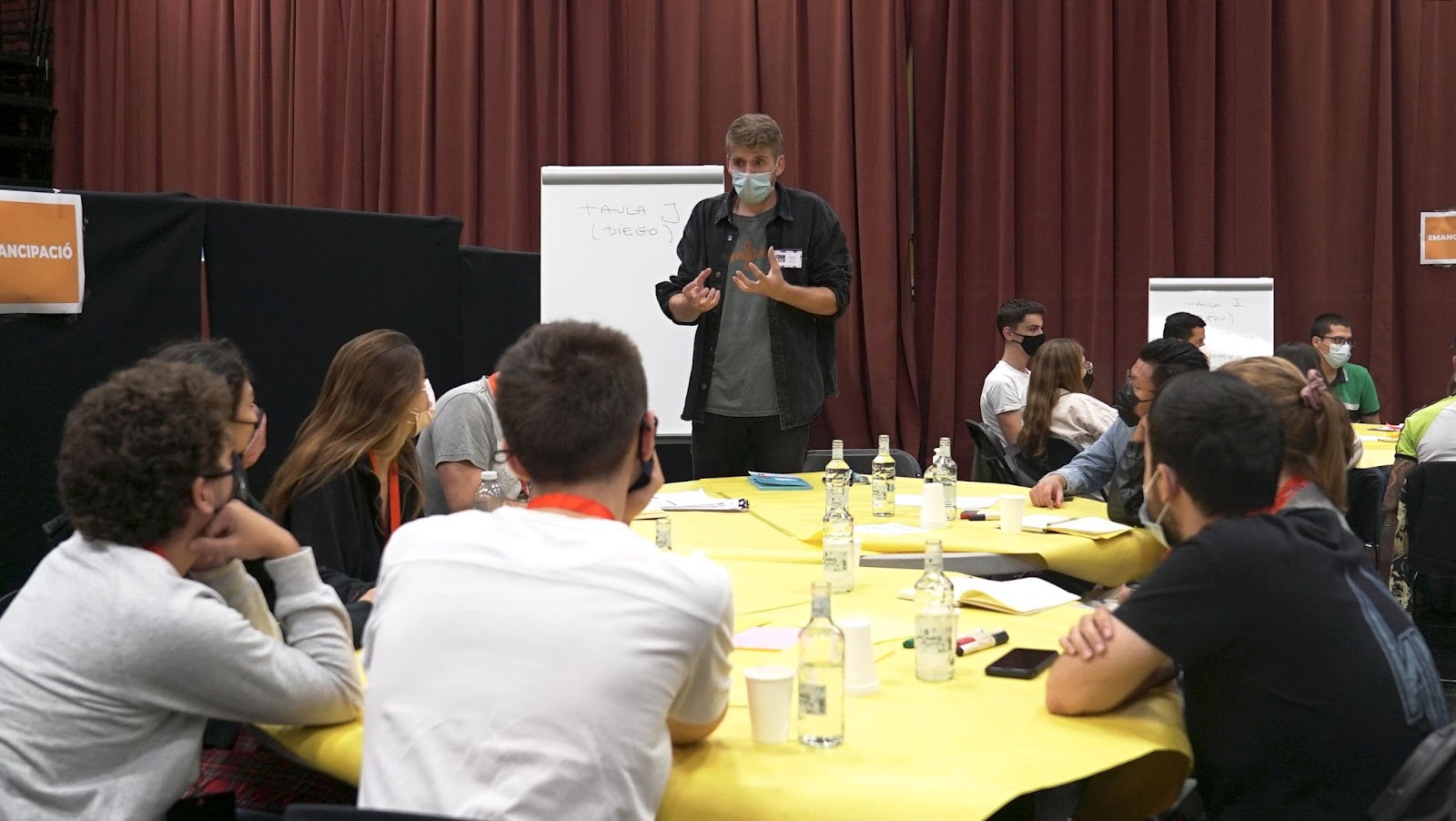
Fig 1: FòrumJoveBCN participants discuss the framing questions for the deliberative assembly. Image Credit: Deliberativa
The forum empowers young people to meaningfully participate in policymaking at the city level by identifying and discussing their needs. It also encourages them to develop solutions to these needs within the city of Barcelona.
How Does it Work?
Forum Jove is a deliberative assembly where members meet to debate and develop recommendations for the Barcelona City Council. The council, in turn, helps to inform youth policies within the city. In its first year, the City Council asked the assembly to respond to the question:
“As a young person who lives in Barcelona, what would you need to carry out your life project?”
The Forum Jove BCN involves five phases:
For the remaining four weekends, the 99 member assembly was split by lottery into three subgroups, each aligned with one theme, with approximately 30 participants in each group. Each group was tasked with deliberating and developing recommendations in response to their respective framing questions.
For the group that worked on Education, their framing question was:
“How can the City Council offer a labor, emotional, academic and values guidance service in the educational stage and beyond? Sub-question: What ways can the City Council improve and offer to disseminate the services it offers to different age groups?”
As for the group that worked on Emancipation, their question was:
“How can the City Council train, accompany and help youth so that they can emancipate themselves, from the age of 27, despite socioeconomic limitations?”
Finally the group that worked on Mental Health, their framing question was:
“How can the City Council promote (raise awareness, motivate, normalize) and provide resources to help (in work groups, workshops...) the mental and emotional health of young people in all the Districts of Barcelona?”
The assembly developed 27 recommendations as a result of the debate phase. Each recommendation had to gain at least 70% support from the entire youth assembly, in order to make it to the list of recommendations that was sent to the Barcelona City Council for approval.4
In the “return” phase, the Barcelona City Council provided Forum Jove BCN participants with feedback on their recommendations and explained which they accepted and which they rejected.3
The City Council rejected only two out of the 22 recommendations that were presented, one of which fell under the theme of Emancipation, and the other the theme of Mental Health. One of the rejected recommendations advocated that the Madrid City Council require companies that want to work for the City Council to reserve jobs for inexperienced and experienced young people. This recommendation was rejected by the Barcelona City Council because it suggested an action that could force companies to hire inexperienced employees, which is not allowed under the city’s current legal framework. The other rejected recommendation called on the Barcelona City Council to subsidize and expand the city’s public mental health system by incorporating a broader range of services and activities such as private professional consultations and alternative therapy services for young people. It was rejected as the city did not see this recommendation as viable in its original format, and did not have the budget to support the recommendation.
The City Council used Decidim - a digital platform developed in Barcelona to facilitate citizen participation - to publish the results of Forum Jove BCN’s recommendations. In addition, the Barcelona City Council worked with a consultant, Deliberativa - a Spanish civil society organization which provides research, design, and training support for participatory democracy projects - throughout the process. The City Council also allocated funds from its budget to facilitate the process.
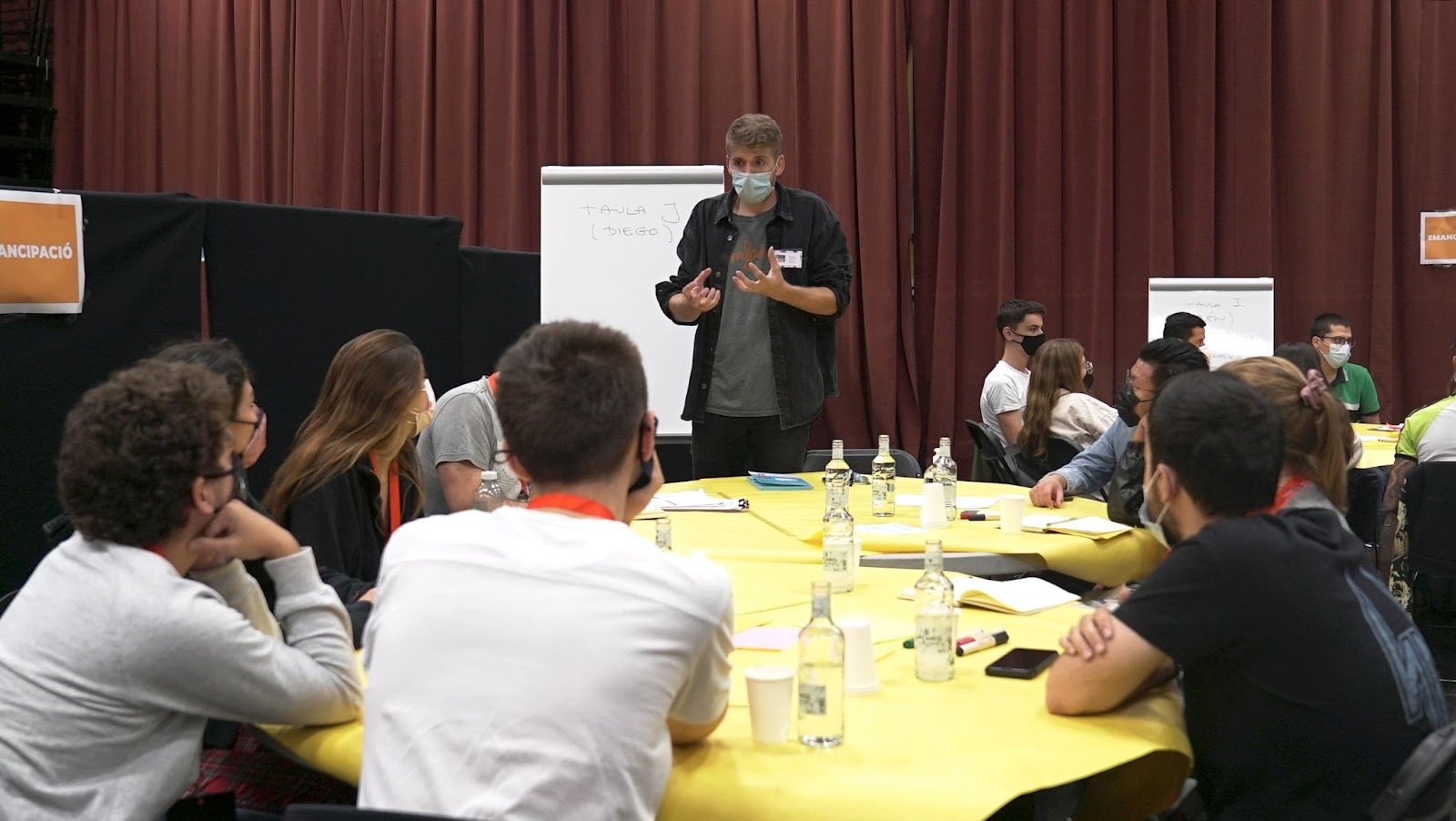
Fig 2: FòrumJoveBCN participants developed recommendations around three thematic areas: Education, Emancipation, and Mental Health. Image Credit: Deliberativa
Who Participates?
99 young people within the ages of 16-29 years old participated in the assembly. These young people were selected through a sortition process whereby a city council staff member selects a representative sample of young people by lottery, from across the districts within the city of Barcelona. This sample took into account the age, gender and socioeconomic standings of the young people in these districts. During the sortition process, Deliverativa helped the Barcelona City Council to select sample criteria for members of the assembly, while City Council staff mailed the letters to participants and ensured that the final group was a representative sample.
Outcome and Impacts
The City Council accepted (i.e. committed to implement as policies) 20 of the recommendations issued by the assembly. Fifteen of these recommendations were approved with some degree of modifications.1 The 20 approved recommendations were then added to a final report that was presented to the mayor of Barcelona for further consideration and then implementation. The goal moving forward is to meet back in a year from now and track what stage of implementation has been reached.
An example of a recommendation that was accepted by the Barcelona City Council was “Fòrum Jove i habitatge” (“Youth and Housing Forum”in English), under the Emancipation theme. This recommendation encouraged the Barcelona City Council to hold a yearly forum for young people that would aid in detecting their housing needs and problems, while also allowing them to create proposals to solve them. The recommendation was welcomed since Barcelona already regularly holds a general housing and rehabilitation forum (known as the “Fòrum d’Habitatge i Rehabilitació de Barcelona [FHAR]).” The city council believed that this recommendation could be accommodated within the existing FHAR framework where professionals, and participants, gather ideas, and provide expert advice concerning alternatives to housing in the city.1
It is difficult to measure the initiative’s overall impact, as the Forum Jove BCN is a recently established youth citizen engagement initiative whose initial recommendations and policy outcomes have not yet come to fruition. However, the initiative has shown some positive strides that are worth acknowledging. According to Mr. Yago Bermejo Abati, Co-director of Deliberativa, the deliberative process of Forum Jove BCN “tries to give autonomy to the participants” regarding agenda setting. The process empowered participants to work neutrally in regard to decision making, and to develop recommendations that are rooted in the lived experiences and expertise of Barcelona’s youth.
Lessons Learned
Diversify language offerings - One challenge that Forum Jove BCN faced was a high dropout rate among assembly members who are immigrants. One possible reason for this trend is that these individuals - who were largely immigrants from Latin America - may have been more comfortable working with the Spanish language, rather than Catalan, which was the predominant language choice in the Forum Jove BCN deliberative assembly. As well, it should be noted that of the youth population in Barcelona, approximately 40% is comprised of immigrants.4 Therefore, in the future, the deliberative assembly is looking to diversify its language offerings to encourage and retain the participation of diverse youth demographics.
1. Ajuntament de Barcelona, “DOCUMENT DE RETORN FÒRUM JOVE,” February 17, 2022. https://ajbcn-decidim-barcelona.s3.amazonaws.com/decidim-barcelona/uploads/decidim/attachment/file/13418/DocumentRetorn_ForumJove.pdf
2. It should be noted that the project is known as both “Forum Jove BCN” (in Catalan) and “Foro Joven BCN” (in Spanish). We use both terms interchangeably in this case study.
3. See https://www.decidim.barcelona/processes/forumjoveBCN?locale=es
4. Interview with Mr. Yago Bermejo Abati, Co-director of Deliberativa
