
Problem Solved
Cases in this category focus on how CI has been used to accelerate problem solving in a specific domain.
CI How-to
Cases in this category highlight one specific design decision.
Task Performed
Cases in this category focus on a specific type of task 'the crowd' performs.
Kind of Collaboration
Cases in this category illustrate a specific kind of group work -- crowdsourcing, collaboration or co-design.
Level of Institutionalization
Cases in this category illustrate a specific level or type of institutionalization -- low to high and 'viral' (achieved success at scale).
Project website
Name: vTaiwan
Topic: Digital Economy Regulation
Location: Taiwan
Implementation Level: National
Owner: g0v, a civic hacker activist group
Years in operation: 2015 - present
Platforms: vTaiwan, a purpose-built platform that uses Pol.is among other tools; in-person
Contact Information: Audrey Tang, Digital Minister, Taiwan
Contact Email: via [email protected]
CASE STUDY LAST UPDATED: October 2020
Introduction
vTaiwan is a four-stage online and offline process in which the public and government work collaboratively to create legislation relating to the digital economy. The project is managed by g0v.tw (pronounced “Gov Zero”), the country’s largest civic technology organization, with political support from Taiwan’s Digital Ministry and parliament. Since vTaiwan launched in 2015, more than 200,000 people have participated, resulting in 26 pieces of legislation passed through Taiwan’s parliament. Though not institutionalized by a regulatory framework, the platform has achieved a high degree of staying power by remaining a volunteer-run, transparent process that has grown over time and “survived” a presidential election. While vTaiwan enables citizen engagement throughout the legislative process, it is a good example of collectively defining the problem because the collective intelligence of the vTaiwan community is used to better understand and come to consensus around regulatory issues related to Taiwan’s digital economy, which the community then works to solve with the input of external stakeholders.
Background
How it All Started
In March 2014, a group of young activists began a three-week occupation of the Taiwanese Parliament in Taipei in response to the Cross-Strait Service Trade Agreement, which would have liberalized trade with China and which, despite strong public protest, the country’s parliament had negotiated behind closed doors. This series of sit-ins, which would come to be known as the Sunflower Movement because student protestors used the flower as a symbol of hope, was led by g0v, a “civic hacker” group which saw the movement as an opportunity to promote transparency and the use of digital tools in the lawmaking process.1 g0v had been working on improving the delivery of Taiwan’s public services since the group’s founding in 2012. Its first project, for instance, was a visualization tool to help citizens understand how the national budget was allocated across sectors and at the local level. The tool was eventually adopted by Taipei’s Mayor to publish online visualizations of the city’s budget.
Jaclyn Tsai, Minister without Portfolio of the Executive Yuan (Taiwan’s parliament), was receptive to the group’s goal of promoting citizen engagement. At a g0v hackathon in December 2014, she asked the attendees if they could “create a platform for rational discussion and deliberation of policy issues that the entire nation could participate in.” In response to the Minister’s challenge, a team of g0v programmers headed by Audrey Tang and Chia-Liang “CL” Kao developed vTaiwan, an open consultation process that brings together experts, government officials, and citizens on a national scale to deliberate, reach consensus, and craft legislation.2
The Collective Intelligence Process
How it Works
The vTaiwan lawmaking process has four key engagement stages: Proposal, Opinion, Reflection, and Ratification.
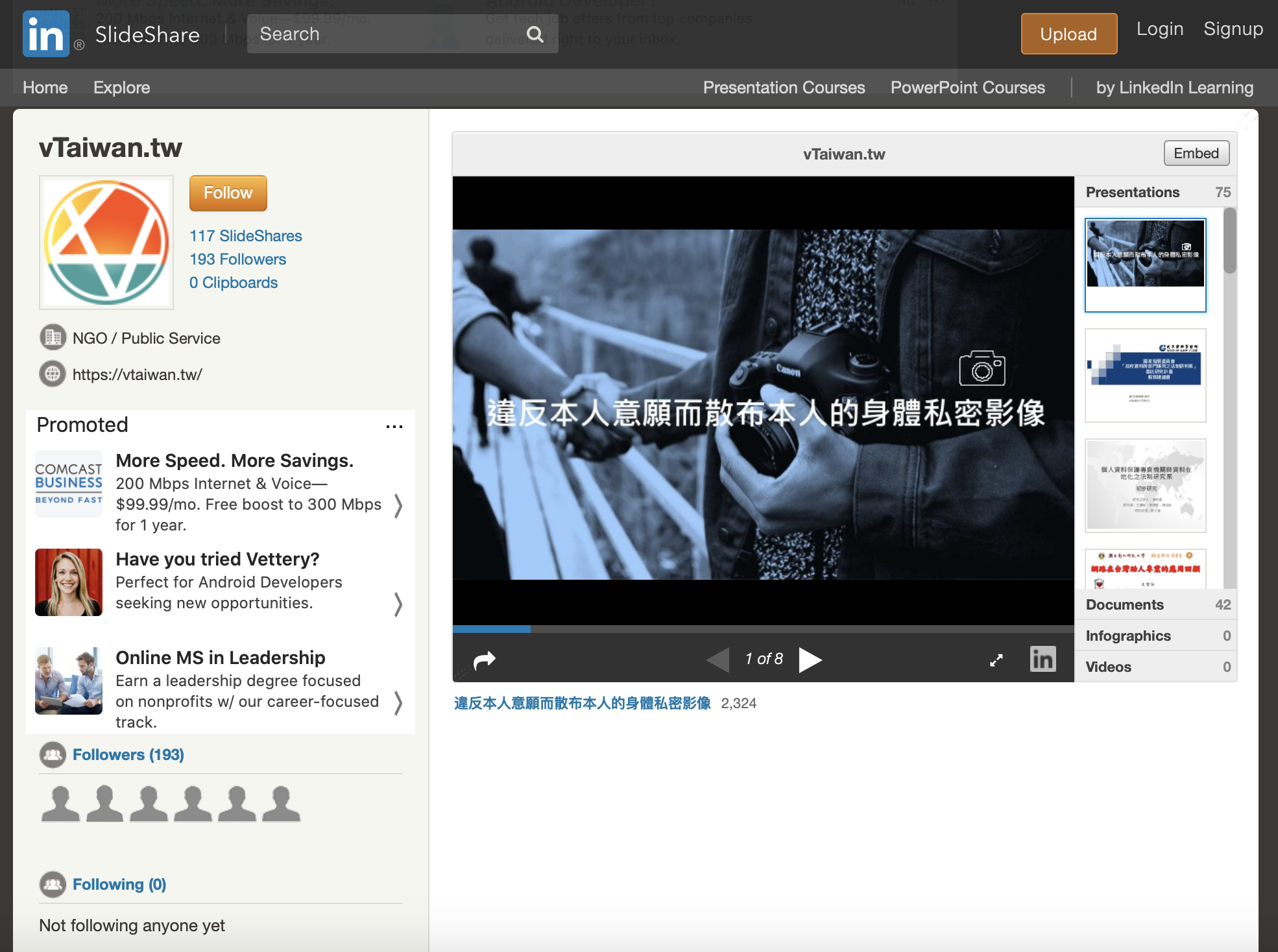 Figure 1: Screenshot of Slideshare, the tool used to share presentations and documents in the proposal stage. https://www.slideshare.net/vtaiwan?utm_campaign=profiletracking&utm_medium=sssite&utm_source=ssslideview
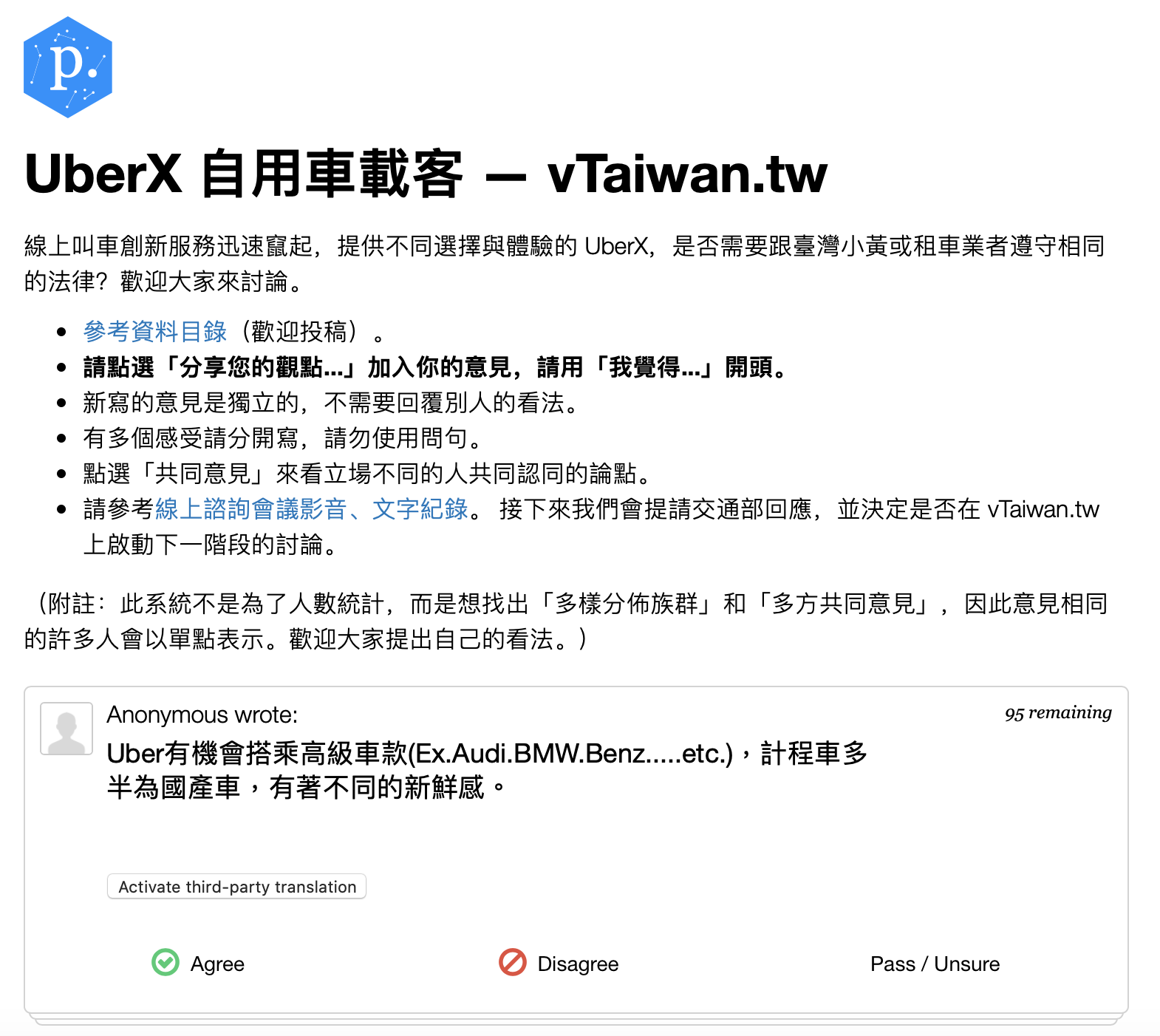 Figure 2: Screenshot of the Pol.is tool user interface used for opinion mapping.
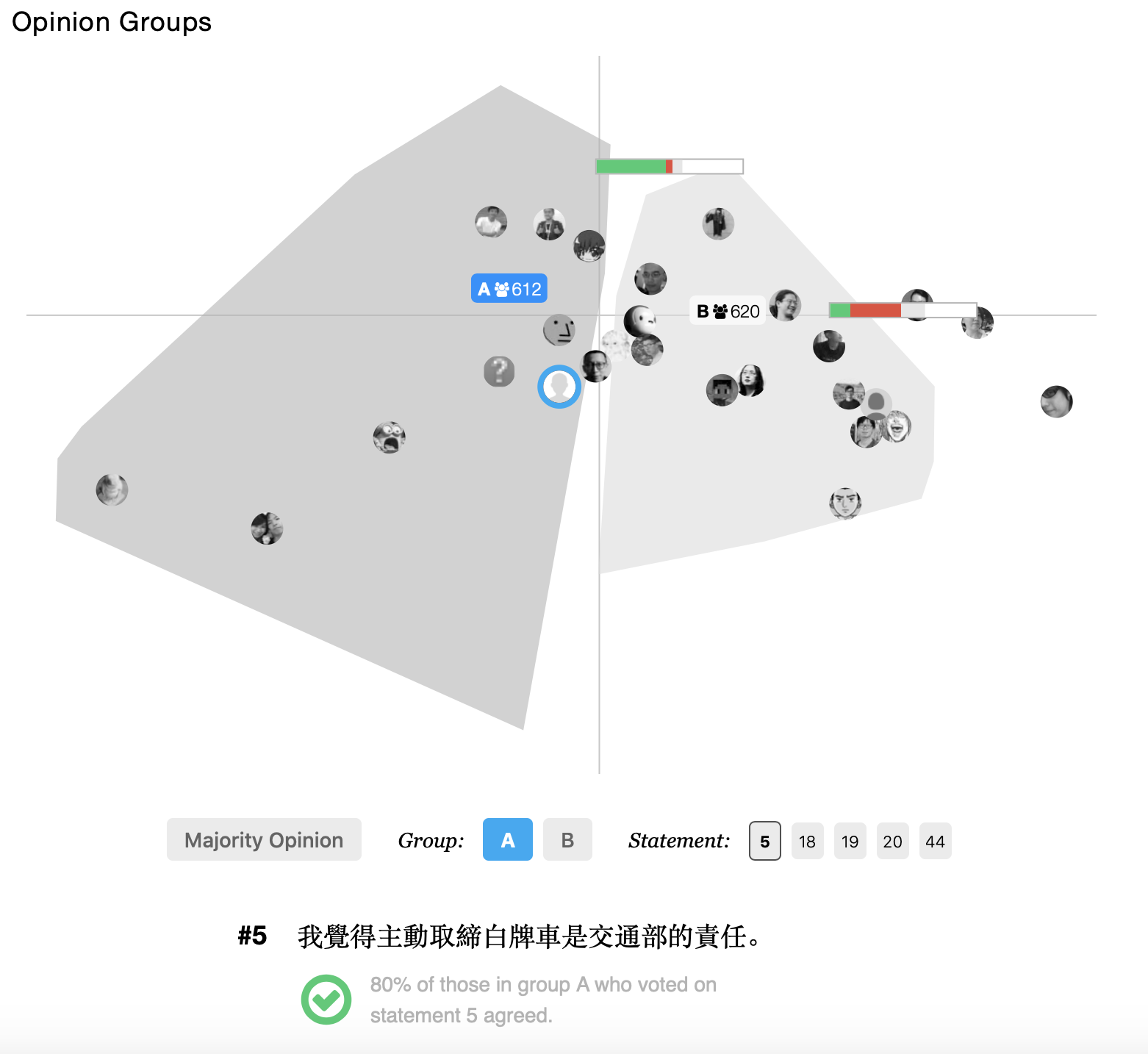 Figure 3: Sample opinion map generated by the Pol.is tool.
The process is flexible and adaptive according to the unique challenges each issue presents. Rather than defining a threshold of support that each proposal must reach, the vTaiwan community decides to advance the proposal to the next stage when a “rough consensus” has been reached.
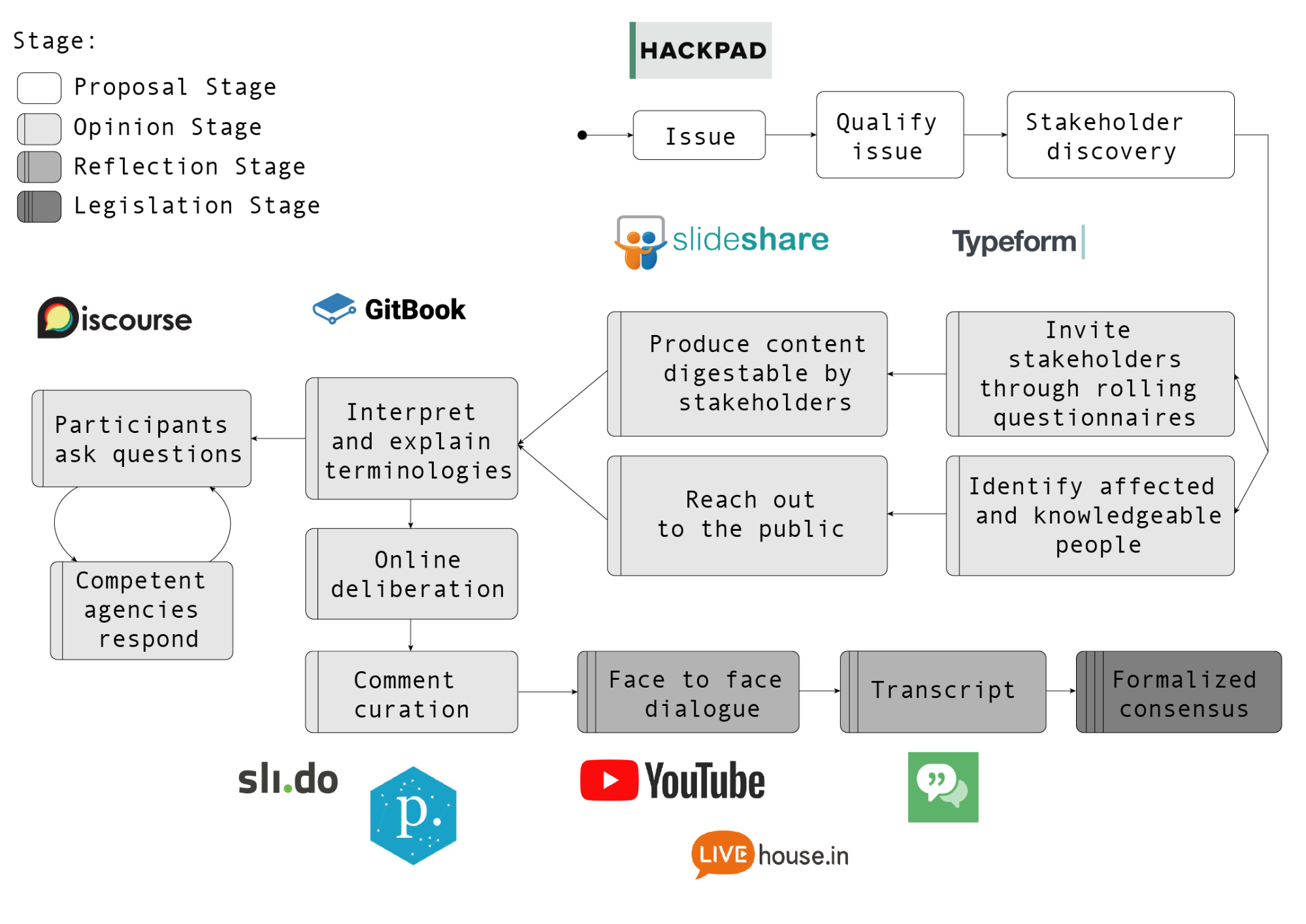 Figure 4: Diagram of the vTaiwan Process https://info.vtaiwan.tw/
Who Participates?
Anyone can join any stage of the process. Participation is self-selected. A notable exception is the in-person consultation, which occurs during the Reflection stage, where attendees must be invited. Though, anyone can view the online livestream and contribute ideas through the chat, which the facilitator can decide to include in the meeting.
As g0v is the largest civic tech organization in Taiwan, the community has a substantial network for outreach. As g0v activist Wu Min Hsuan remarked in 2017, “I wouldn’t say that everyone knows g0v, but people who are interested in tech and/or in politics definitely do.”3 For instance, during the Opinion stage, stakeholders within g0v’s network receive surveys to collect their feedback on the initial portions of the process from stakeholders. Surveys also reach others via online advertisements and Facebook.
vTaiwan has created a community that encourages open collaboration and experimentation, which in turn leads to sustained participation. This means that new participants do not have to start from a blank slate, Audrey Tang, Taiwan’s Digital Minister remarks that participants do not “...have to fight an existing authority [and established] culture that says no.”4 For example, in the 2015 engagement about the regulation of Uber, there was active participation:
How is it run?
g0v volunteers manage the process. The use of effective online tools has greatly diminished the need for human moderators. On the Pol.is platform, users “vote” on the comments of others rather than replying to them directly, which reduces the risk of “flame wars” and endless arguments. This functionality helps to drive the discussion and build consensus without the need for moderators.5
The unique, volunteer-based structure of vTaiwan also keeps costs down. Most of the tools used by vTaiwan are free. Pol.is is free to use and also open source. The vTaiwan process was supported pro bono by the organization that develops and maintains Pol.is, which provides support at negotiable fees. While g0v does not charge for its services, the value of having a team of tech-savvy civic hackers actively involved in the project should not be underestimated. The process also receives support from the Digital Ministry, which spends about $100,000 on the project.
Key Innovations
Taiwan’s Digital Minister, Audrey Tang, describes vTaiwan’s approach as a kind of “bootstrapping”-- a term borrowed from computing which means that the community uses its past work to drive itself forward rather than relying on external inputs. As Minister Tang said,“I think [vTaiwan] is closer to the civic tech community than it is actually to my office or any minister...what we’re doing is institutionalizing the parts that worked.” This approach is reflected in the plethora of related projects vTaiwan and the larger g0v community has developed to fill the gaps that vTaiwan is not designed to address.
A prime example is the online platform Join, launched in 2015. Join provides several functions --many of them inspired by previous projects-- on a common site that is maintained by Taiwan’s government. The petitioning function, like vTaiwan, uses Pol.is for consensus building. The forum section, where users can respond to petitions, uses and upvote/downvote functionality inspired by Your Priorities (the online forum software developed by the Citizens Foundation for the Better Reykjavik initiative in Iceland). Another section, an adaptation of g0v’s inaugural project, visualizes the allocation of Taiwan’s national budget.
The vTaiwan community has also tackled democratic issues outside of lawmaking. In the run-up to each national election, the vote.ly.g0v.tw platform aggregates information about legislative candidates into a common system. This includes information such as the attendance and voting records of incumbent legislators on particular issues (e.g. education or finance) so that any user can easily compare candidates. Another example is Fact Check 2020, a platform created to fact-check statements made by 2020 presidential candidates during campaign speeches and debates.
Outcome and Impact
To date, 200,000 people have participated on vTaiwan to define the problem around such complex issues as Uber, telemedicine, online alcohol sales and other hard topics. More than 80 percent of processes initiated on the platform have led to “decisive government action”, including the passage of 26 pieces of national legislation.
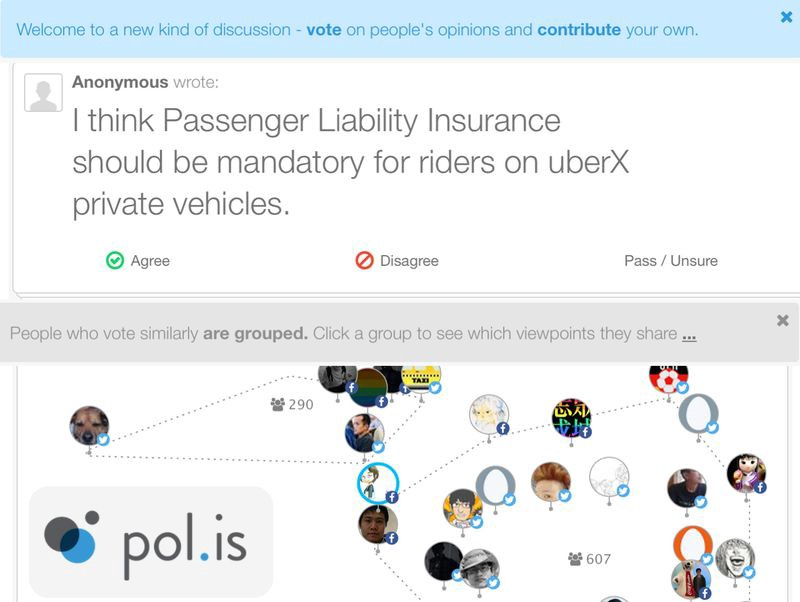 Figure 5: Commenting and forming opinion groups using Pol.is https://civichall.org/civicist/vtaiwan-democracy-frontier/
vTaiwan’s most impactful contribution has not been the sheer volume of participation nor its numerous legislative accomplishments, but the smoothing of public discourse around controversial issues. This is a result of the platform’s approach of bringing together groups with differing viewpoints to find a rough consensus. The 2015 debate over rideshare regulation, for example, engaged representatives from Uber Inc., the Association of Taxi Drivers in Taipei, Taiwan Taxi, and the Ministries of Transport and Communications, Economic Affairs, and Finance to create amendments to the country’s existing regulations that were acceptable to all parties involved. This validated vTaiwan’s approach as a methodology for improving the quality of legislation even when dealing with a contentious topic.6
In 2016, a similar controversy about online sales of alcohol was partially resolved on the platform. In this instance, alcohol merchants, e-commerce platforms, and social groups had reached an impasse in a debate on how to regulate a 2011 law that legalized online sales of alcohol, which some feared would make it easier for children to surreptitiously purchase alcohol using the Internet. Over the course of several weeks, 450 citizens proposed and debated solutions to the issue on vTaiwan. Several of the resulting regulations --e.g. requiring the vendor to verify the age of the purchaser for online sales-- were incorporated into a series of amendments in a draft bill that were introduced to parliament in April of 2016. However, the bill did not pass parliament after President Tsai “withdrew all bills awaiting legislative approval” upon taking office in May of the same year. 7
The flexibility of the vTaiwan process has also allowed the platform to experiment with new approaches to regulation. In 2017, a vTaiwan-initiated law created Taiwan’s first “regulatory sandbox”, which liberalized regulation for qualifying financial technology companies testing innovative approaches.8 Similar regulatory sandboxes for electric scooter usage, autonomous vehicles, and the 5G spectrum network are currently in development on vTaiwan.
Join also plays a major role in resolving controversial debates on regulatory topics beyond the digital economy. In one recent example, a user posted a petition entitled “Stop the Divine Pig Weight Competition Sacrifice”, which called for an end to the practice of raising excessively fattened pigs for slaughter as part of the annual Hakka Yimin folk culture festival. Upon acquiring the requisite 5,000 signatures on Join, the case was adopted by three Participation Officers, who convened a series of collaborative meetings involving religious and cultural groups, animal rights groups, pig farmers, and relevant ministries.9 These meetings produced a series of recommendations on how to resolve the dispute, which included:
Divine pigs aside, the Participation Officer network has processed 60 such cases since its creation in 2017. The Join platform as a whole has seen more than 10 million unique visitors --nearly half of Taiwan’s population-- since its launch in 2015.10 Minister Tang attributes this success in part to the platform’s innovative recommendation system. When a user clicks on a particular petition, for instance, the platform recommends related petitions, budgets, or regulations to comment on. This encourages users to keep participating as the platform retains their interest, similar to browsing products on Amazon or titles on Netflix.
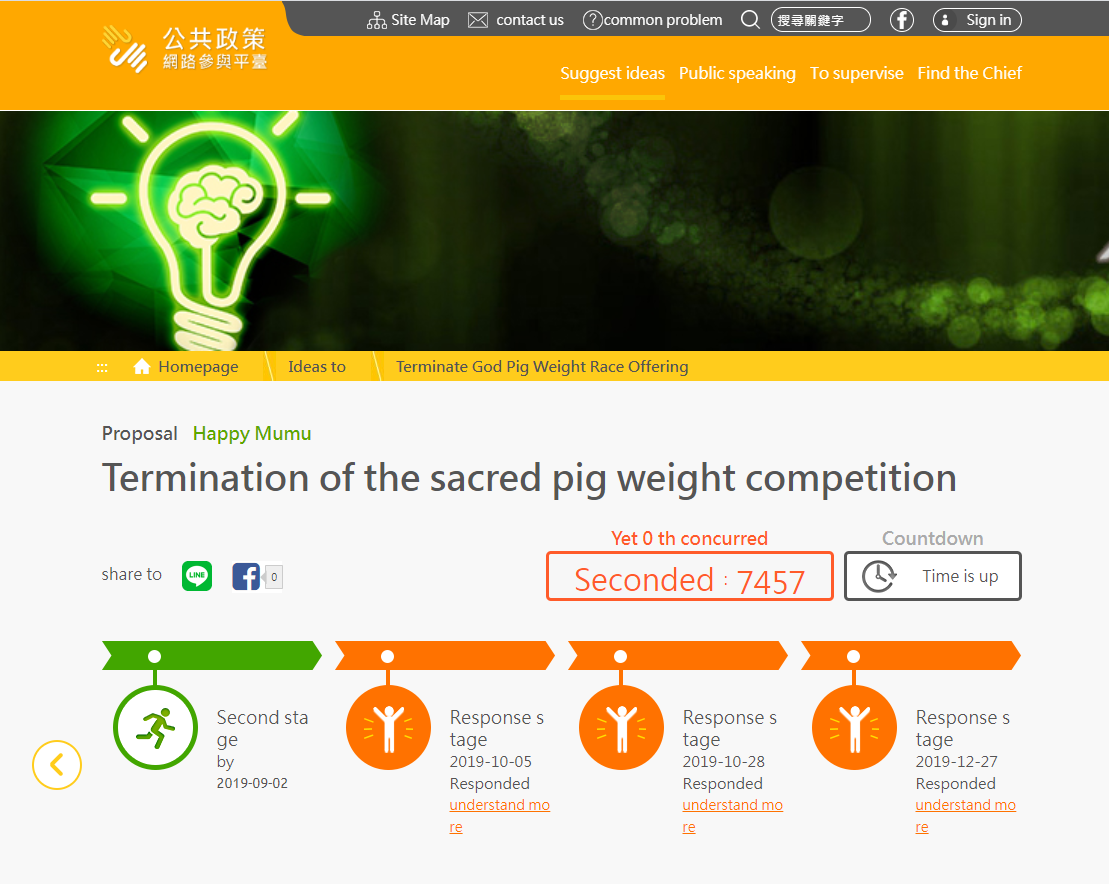 Figure 6: Tracking the progress of a Join petition (translated by Google)
https://join.gov.tw/idea/detail/09ae5b7b-b8d9-4c92-bc51-46416f4b2df4
Current Status
vTaiwan’s independence has helped the platform to achieve legitimacy in the eyes of its community and among members of parliament. Indeed, vTaiwan survived the transition from Ma Ying-jeou to Tsai in May of 2016, largely because the platform is seen as an independent, pro-transparency force that could benefit the opposition party as much as the incumbent administration.
In recent years, the platform has become more closely tied to the government. In 2016 Audrey Tang, a key figure in the Sunflower Movement who led the development of vTaiwan and the Join platform, was appointed Digital Minister by President Tsai. Further, since 2017 a regulation has been in place that requires each ministry to appoint one or more “Participation Officers” (PO) to act as “links between the general public and the public sectors, and as channels for inter-agency collaboration”, which includes engaging in vTaiwan.
The creation of the PO network is a step toward mitigating one of the key risks of vTaiwan-- namely, that the appointment of Minister Tang, with her close ties to the platform, could make vTaiwan a target for a future leader seeking to undo the accomplishments of the Tsai Administration. “As long as there is a horizontal minister willing to call up relevant stakeholders within the government, which is easy now with the PO network, then the binding process is still there,” said Minister Tang. “My main function is just to ensure that the right stakeholders within the government show up.”
Yet, in the absence of a legal framework, the risk that a future administration could dismantle the binding power that vTaiwan currently enjoys remains a real possibility. The vTaiwan community has also made some attempts to institutionalize the process in law. One piece of legislation, a clause in the Digital Communications Acts (DCA), would have created a legal framework for the executive branch to respond to cross-ministerial issues that originated on forums like vTaiwan. However, this legislation, itself a product of vTaiwan, did not complete its parliamentary process in 2019 due to a technicality. President Tsai Ing-wen had previously promised to create a digital ministry or council to act as the competent authority for digital lawmaking. As the language in the DCA charged the president’s cabinet with this task rather than a designated ministry or council, the clause was considered outdated and did not pass.
Regardless, there appears to be cross-partisan support to create a dedicated authority to institutionalize digital policymaking processes like vTaiwan. During Taiwan’s 2020 presidential election President Tsai’s challenger, Han Kuo-yu, concurred with the need to create a dedicated authority rather than leaving the Cabinet to deal with digital lawmaking.
Lessons Learned
Due to its complexity and adaptation to the circumstances of Taiwan’s political system, it would be neither easy nor advisable to attempt a carbon copy of vTaiwan in another context. Despite lacking binding power by law, vTaiwan has achieved a high level of institutionalization through a unique combination of top-down political support and a grassroots ethos that lends the initiative legitimacy.
CORRECTION
An earlier version of this case study had an incorrect description of the cost structure for using Pol.is. That information has been updated with the input of Pol.is. [Updated October 20, 2020]
