
Problem Solved
Cases in this category focus on how CI has been used to accelerate problem solving in a specific domain.
CI How-to
Cases in this category highlight one specific design decision.
Task Performed
Cases in this category focus on a specific type of task 'the crowd' performs.
Kind of Collaboration
Cases in this category illustrate a specific kind of group work -- crowdsourcing, collaboration or co-design.
Level of Institutionalization
Cases in this category illustrate a specific level or type of institutionalization -- low to high and 'viral' (achieved success at scale).
Project website
Name: Syria Tracker
Topic: Violence
Location: Syria
Implementation Level: National
Owner: Humanitarian Tracker, a nonprofit organization based in the United States
Years in operation: 2011 - present
Platforms: Crowdmap (web and mobile)
Contact Information: Hend Alhinnawi, Co-Founder and CEO of Humanitarian Tracker
Contact Email: [email protected]
CASE STUDY LAST UPDATED: October 2020
Syria Tracker is an online platform that allows users to report what is happening to and around them during the Syrian conflict, including evidence of human rights abuses, epidemic diseases, and other welfare issues. Given the sensitive nature of the topic, the platform incentivizes participation by offering multiple opportunities for secure and anonymous reporting. This data is published in an interactive web map, where anyone can view the locations of each report, along with other optional details such as photographic or video evidence, to encourage those outside of Syria to utilize the data. This crowdsourcing process has led Syria Tracker to become one of the most comprehensive data sources available to observers of the ongoing conflict in Syria.
Background:
When widespread protests in Syria broke out in early 2011, reports of violence against civilians quickly emerged. Threats of violence and a government crackdown on foreign media made it difficult for journalists and researchers to understand what was happening on the ground or corroborate the reports of others. In response, the US-based nonprofit Humanitarian Tracker developed Syria Tracker in April of 2011.
Syria Tracker was developed in partnership with Ushahidi, a Kenya-based nonprofit. Syria Tracker used Ushahidi’s Crowdmap software, a free tool that allowed users to aggregate reports from various sources, including cell phones and the web, and display them on an online map.1 Syria Tracker initially gained traction by working with citizens on the ground who spread knowledge of the platform by word-of-mouth. In the earlier stages, Syria Tracker also collaborated with several other crowdsourcing efforts to compile and disseminate information. These included: Middle East Voices (Voice of America project defunct as of 2014), Syrian Martyrs (defunct as of 2016), Silmya (defunct as of 2013), and Syrian Youth Movement.
The result?:
Syria Tracker’s grassroots effort yielded early results. From its launch in April 2011 to January 2012, the platform was used to log 550 reports for the category “killed” and 356 for the category “missing or detained.”2 This crowdsourced reporting made it possible to identify 6,317 individuals killed in 463 cities over a span of 286 days (dating from March 18, 2011 to January 8, 2012). Demographic data such as the age of the victims was also collected. By March 2012, Syria Tracker had collected reports of 10,000 deaths, almost 90 percent of which contained supporting video or photo evidence.3
This engagement has been sustained as the conflict in Syria has gone on. At the time of writing, nearly 5,000 reports have been published through Syria Tracker.4 A far larger number of reports have been submitted that have not been published. According to the platform’s co-founder Hend Alhinnawi, Syria Tracker has received over 150,000 geo tagged reports from Syria and in neighboring countries. Alhinnawi explained that this low publication rate reflects Syria Tracker’s rigorous verification process. Alhinnawi also stressed that this data comes from all over Syria and represents all sides of the war, a testament to the platform’s success in incentivizing widespread participation.5
As intended, Syria Tracker’s data has also been accessed and utilized by users outside of Syria.
By December of 2011, the Syria Tracker site had been visited by individuals from 1,071 cities in 114 countries across the world.6 Humanitarian Tracker also collaborated with organizations around the world (including the United Nations, Women’s Media Center, and Google) to provide them with data in support of humanitarian efforts on the ground. In one instance, the Syria Tracker data even helped to save 150 lives by providing information about checkpoints and safe evacuation routes to a humanitarian group whose members needed to be evacuated from Aleppo. 7
How does it work?:
People can report violations by email, by using a Twitter hashtag, or through an online form on the Syria Tracker website.8 Anyone can submit a report of an incident which includes the following criteria (*indicates required field):
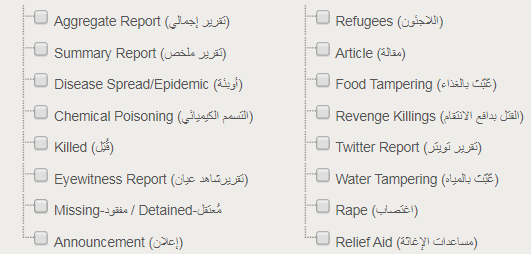
All identifying information is removed prior to publication.
In the early stages, participants could also use Google’s Speak2Tweet service, where they could call a number that would record and post the messages to Twitter with the hashtag #Syria. The platform does not allow submission of reports through SMS messaging as they are easily traced, and this could jeopardize the safety of the reporters.
The platform takes extensive measures to protect the safety of its users. In addition to the tutorials it provides for submitting reports via several channels, it offers valuable instructions on security precautions to take when submitting reports from the field and to enhance privacy.
Syria Tracker verifies reports through triangulation, meaning that reports are corroborated by information from additional sources. This is done by pulling information from social media media and online news media through an automated process known as data mining. While 90 percent of the verification process is done through this automated data mining system, a group of US-based Humanitarian Tracker volunteers also screen reports for quality, reliability and to ensure they are not duplicates, and to be sure there is no identifying information.
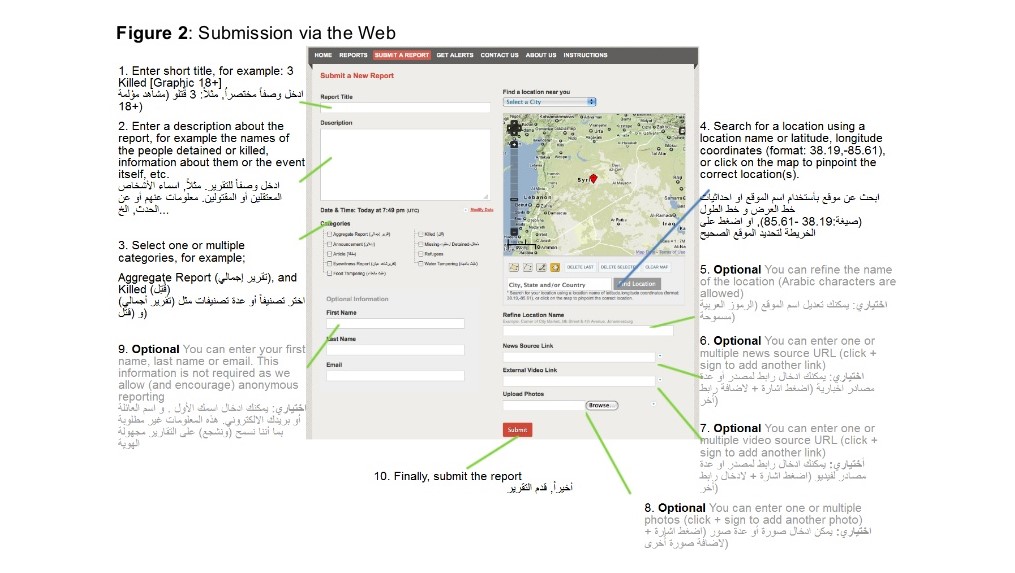
Figure 1: Syria Tracker’s online submission form (Source: https://www.slideshare.net/humanitariantracker/syria-tracker-crowdsourcing-crisis-information?qid=0e109e1f-8acf-4a72-b292-dc5b58327267&v=&b=&from_search=4)
Visualizations of data allow organizations and governments to see trends, such as spikes in killings on a certain date or in particular locations, which helps to pinpoint causes and prevent violence in the future or humanitarian and relief needs on the ground.
Why It Works:
