
Problem Solved
Cases in this category focus on how CI has been used to accelerate problem solving in a specific domain.
CI How-to
Cases in this category highlight one specific design decision.
Task Performed
Cases in this category focus on a specific type of task 'the crowd' performs.
Kind of Collaboration
Cases in this category illustrate a specific kind of group work -- crowdsourcing, collaboration or co-design.
Level of Institutionalization
Cases in this category illustrate a specific level or type of institutionalization -- low to high and 'viral' (achieved success at scale).
Project website
Name: AIR Louisville / Propeller Health
Topic: Public Health
Location: United States
Implementation Level: city
Owner: Louisville Metro Government / Propeller Health
Years in operation: 2012-present / 2010-present
Platforms: Mobile app
Contact Information: Ted Smith, Former Chief of Civic Innovation at City of Louisville and now Professor of Environmental Medicine at the University of Louisville School of Medicine
Contact Email: via [email protected]
CASE STUDY LAST UPDATED: October 2020
Asthma and chronic obstructive pulmonary disease (COPD) can be pervasive, impairing, expensive, and even life-threatening, especially when patients do not receive proper treatment. In the United States asthma is a prevalent condition - 7.6% of people over 18 years of age have it and 13.6 % have had it at some point.1 Apart from the health implications, these conditions cost the US economy over $80B per year, according to research published in the Annals of the American Thoracic Society.2 The study found that, for the 15.4M people in the US with treated asthma, the associated out-of-pocket medical cost of asthma each year was $3,266 per person. To address the serious challenge of asthma, the city of Louisville, Kentucky, a city where poor air quality makes it one of the “most challenging” in the US for people with asthma to live, turned to the collective intelligence of its residents to get more timely and objective data of where and when asthma is occurring.3
A key problem in effective and rapid treatment -- and prevention -- is accurate and complete information about the onset of an incident. Doctors are reliant on patients’ ability to recall factors surrounding an incident and patients may not be aware of contributing environmental factors. At a health research and policy level, the typical method for studying asthma outbreaks in specific locations is to conduct inefficient personal interviews with each patient, which could take months or even years.
Confronted with this problem in Louisville was Ted Smith, the Louisville Metro Government’s Chief of Civic Innovation. Smith says he knew that Louisville:
...had a very high rate of breathing disorders compared to the national average. I spent enough time with companies having a hard time relocating to Louisville because of this, that when Mayor Fischer asked me what was on my innovation agenda, I knew this had to be part of it.4
Smith saw an opportunity to “revolutionize” asthma treatment in collaboration with the digital health firm, Propeller Health (then a research project called Asthmapolis) and local partners.5 In 2012, they launched the Air Louisville pilot program to capture better data about asthma and COPD triggers so they could use the knowledge to inform better interventions. Support from the Robert Wood Johnson Foundation enabled participation in the program to be expanded to include hundreds more residents.
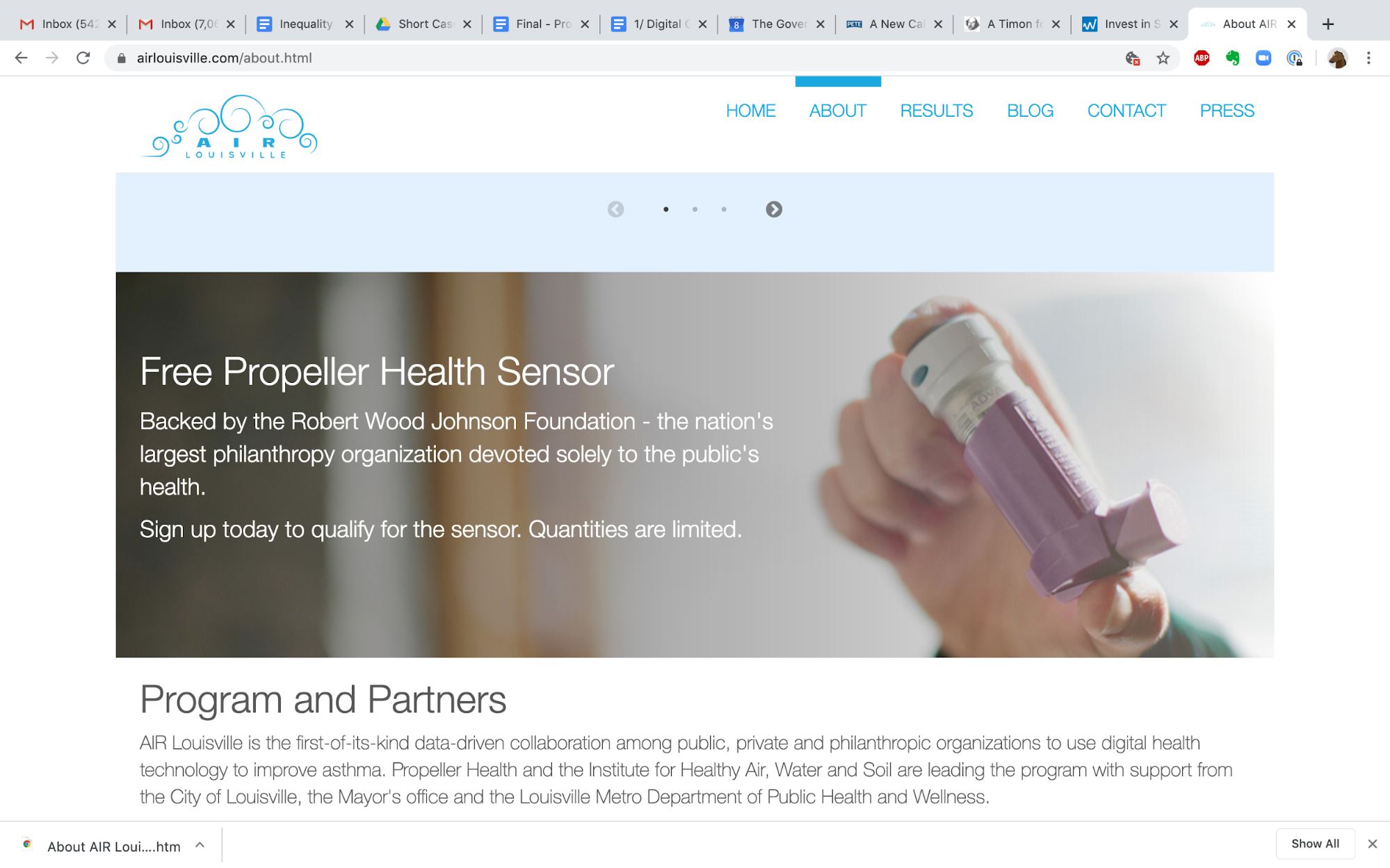
Figure 1: A Propeller Health inhaler fitted with sensors (Source: https://www.airlouisville.com/about.html)
The result?
In Air Louisville, 1,147 residents signed up to Propeller Health’s mobile app and were given inhalers fitted with sensors.
The sensors captured data on the location, date and time, and dosages of inhaler use.
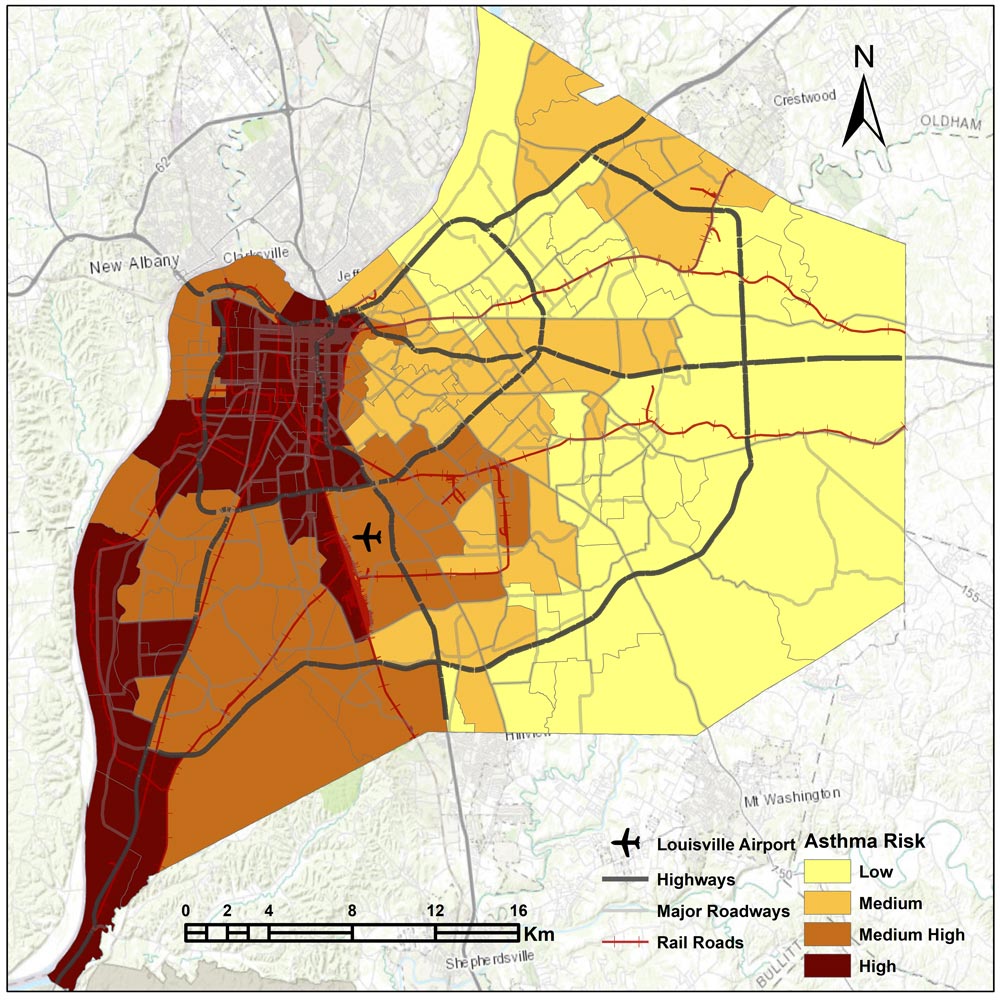
Figure 2: Image of the asthma risk “heat map” (Source: https://www.airlouisville.com/results.html)
The platform combines this data with air quality and weather data to create a map of triggers for asthma and COPD incidents across the city. The app also enables patients to get reminders to self-medicate and other tips for managing their condition.
Using the map of asthma and COPD triggers, the Metro Government identified steps it could take to improve air quality. This included developing recommended routes that directed trucks away from at risk neighborhoods, planting more trees, and considering zoning policies that create buffer zones around schools and residential areas to minimise the effect of highways and industrial emissions. The Government also introduced a notification system to alert residents when poor air quality and weather conditions increased the risk of incidents.6 Ted Smith, now a Professor of Environmental Medicine at the University of Louisville, meets regularly with Metro Government staff to discuss further implementation of the recommendations.
Over a period of 12 months, the Air Louisville program observed in participants enrolled in the project:7
Air Louisville data continues to be applied in other ways. It was used to show health improvements after two energy plants switched from coal to natural gas. It has also helped to launch a new project led by the University ofLouisville - Green Heart - a five-year clinical trial in which researchers are examining whether increasing green space in a neighborhood improves air quality and human health.
Adoption of Propeller Health’s technology has grown too. Propellor’s sensors and app are now used by more than 100,000 people in the US for managing asthma or COPD.8 As of 2017, Properllor’s technologies were deployed in more than 45 programs, some of which include large health systems such as Dignity Health.9 The Propeller mobile app also continues to evolve and now includes a feature that helps people to manage their prescriptions and find a local pharmacy.
How did it work?
Air Louisville began with a pilot study conducted by the Metro Government and Propeller Health (then-known as Asthmapolis) in 2012, with 300 inhaler sensors distributed to Louisville residents. This pilot helped to demonstrate that, contrary to popular belief, asthma triggers were not specific to where the participants lived but rather appeared all over the place due to different environmental factors.10
The pilot generated significant public interest, including from the Robert Wood Johnson Foundation, which supported Ted Smith and the Community Foundation of Louisville to create the Institute for Healthy Air, Water and Soil. A partnership involving the Institute, the Mayor’s office, Louisville Metro Government, Propellor, and a coalition of employers, healthcare providers and advocacy groups that helped to enroll participants in the program, then developed and launched the expanded version of Air Louisville. A total of 1.2 million data points were collected, including 251,000 medication puffs, that were combined with over 5.4 million environmental data points to create the map of asthma and COPD triggers that informed the Louisville Metro Government’s responses.11
Propeller Health’s app and sensors gather and share data by:12
Why It Worked
The success of Air Louisville can be attributed to:
