
Problem Solved
Cases in this category focus on how CI has been used to accelerate problem solving in a specific domain.
CI How-to
Cases in this category highlight one specific design decision.
Task Performed
Cases in this category focus on a specific type of task 'the crowd' performs.
Kind of Collaboration
Cases in this category illustrate a specific kind of group work -- crowdsourcing, collaboration or co-design.
Level of Institutionalization
Cases in this category illustrate a specific level or type of institutionalization -- low to high and 'viral' (achieved success at scale).
Project website
Name: Listening to Africa
Topic: Welfare monitoring
Location: Sub-saharan Africa (Madagascar, Malawi, Senegal, Tanzania, Togo, and Mali)
Implementation Level: national
Owner: World Bank Group
Years in operation: 2012-2017
Platforms: Mobile phone; In-person
Contact Information: Alvin Etang Ndip, Senior Economist, World Bank Group
Contact Email: via [email protected]
CASE STUDY LAST UPDATED: October 2020
Crises, such as disease and famine, spread rapidly if left unreported. Traditional data collection methods, such as in-person surveys, delay responses on the ground. Today, the advent and dissemination of mobile phones, accelerates the process of talking to people who are normally difficult to reach.
The World Bank Group, in collaboration with national statistical offices and NGOs, piloted the use of mobile phone-based surveys for crisis-monitoring in six Sub-Saharan countries. Known collectively as Listening to Africa (L2A), the pilots sought to offer development agencies and policymakers more timely data about vulnerable populations. As mobile phone ownership rates have risen in Africa, mobile telephony has become an important new way to gather data for research and policy. The World Bank Group stated:
The ultimate aim of the program is to develop a high-frequency phone survey system which could be integrated into national statistical systems, just like censuses, surveys and other administrative data. These surveys strive to complement traditional household surveys and fill in data gaps with more frequent, real-time, high quality representative data on wellbeing in a cost-effective manner.1
Between 2012 and 2017, the L2A initiative operated in Madagascar, Malawi, Senegal, Tanzania, Mali and Togo.
The result? L2A has proven to be a successful example of how collective intelligence can be generated at scale and across a large geography by taking advantage of the common technology of mobile phones and applying it to population surveys.
For example, in Mali, L2A used mobile phone surveys to monitor the wellbeing of those fleeing civil conflict in the north of the country. The 500 people surveyed included those in refugee camps in neighboring countries, displaced people living in the capital Bamako, and refugees who returned to regional cities as the conflict subsided. Following a baseline survey in July 2014, the mobile phone surveys gathered data on nutrition, employment, social cohesion, and the challenges associated with returning home.2 The data was shared with decision-makers and used to inform responses such as the design of refugee return programs. In Malawi, L2A established a sample of 1,500 households, covering all but one of the country’s 28 districts. When Malawi was affected by floods in January 2015, mobile phone surveys enabled information about the severity and impact of a major flood to be collected “within a couple of days.”3
L2A also found mobile phone surveys could help to tap this type of collective intelligence more frequently and detect problems sooner than methods typically used by statistical agencies. For example, L2A researchers and their in-country partners used mobile phone surveys to:
National statistical agencies or the NGO partners also shared L2A data publicly, creating a new resource for decision makers built on information collected directly from those affected by crises.
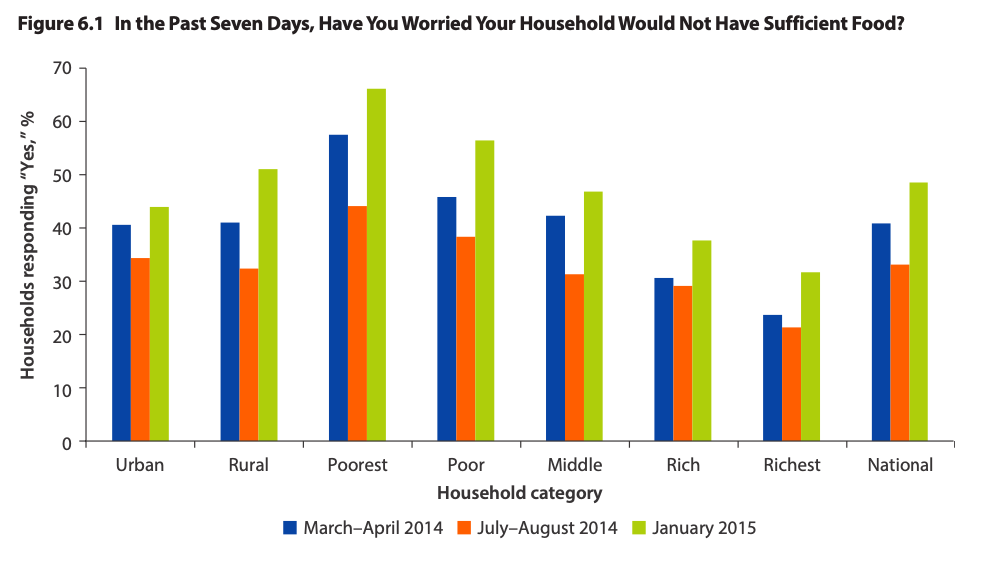
Figure 1: Data from Listening to Madagascar (the country’s Listening to Africa pilot).8 Data collected through the trials was shared by World Bank Group researchers and through national statistical agencies (Source: https://doi.org/10.1596/978-1-4648-0904-0 / CC BY 3.0 IGO)
L2A also found mobile phone surveying could be cost effective, especially for follow up surveys where the initial costs, such as a baseline survey, equipment and setting up a call center, had been accounted for.9
Even as the World Bank was rolling out the L2A initiative it was applying what it was learning to other contexts. In Liberia and Sierra Leone it used mobile phone surveys to rapidly monitor the socio-economic impacts of the 2014 Ebola crisis.10 In 2017, it used the same approach to assess the population at risk of famine in the drought and conflict-driven humanitarian crisis concentrated in Nigeria, Somalia, South Sudan, and Yemen.11
In 2016, the World Bank Group published a free guide, based on findings from L2A and similar work conducted in other countries, to support the effective implementation of mobile phone surveying in developing countries.
How did it work?
The World Bank initially partnered with Twaweza, a Tanzanian NGO in 2010 and 2011. The project aimed to assess what citizens thought about a new constitution for the country using a combination of face-to-face and mobile-phone surveys. This project helped to demonstrate that reliable data could be collected by mobile phone. Between 2012 and 2017 the project was expanded into the full L2A initiative to consolidate, build on and share best practice for mobile phone surveying.
The L2A methodology has four steps:12
Step 1: Baseline survey — this is a face-to-face household survey which serves as a baseline, where respondents are identified and core household and respondent characteristics are collected. At this point, the field team distributes a mobile phone (where necessary) to the household and sometimes a solar charger, and the participant is trained to respond to mobile interviews. The households are selected randomly from the country’s population center data, and in many instances did not previously have a phone.
Step 2: Mobile phone survey — following the baseline survey, mobile phone interviews are conducted monthly, starting with respondent verification questions (e.g. name, age, gender). Phone surveys allow for interaction and clarification of questions as need be in case of unclarity on questions and also account for the fact that some household respondents are illiterate. In L2A, phone interviews were conducted by either the World Bank team, or in the case of Madagascar, the NGO Human Network International helped collect responses.
Participants who complete each phone interview are ‘remunerated’ with phone credit (equivalent to about $US1 per interview) transferred directly to their mobile phone after every interview (this is necessary if they do not have phone plans to keep the numbers active and also acts as an incentive for them to continue to respond). Then, 1,500 - 2,000 respondents are called every month for 10-20 minutes to discuss general welfare questions that are tailored each month (the interviews are intended to be flexible and adaptive).13 The questions are used to assess change in welfare based on the baseline data from step one. In L2A, each household was interviewed by the same interviewer every month in order to create a better relationship and extract better data. In addition, interviewers who could not reach their household tried again throughout the month in order to ensure they responded. They also took down numbers of other members of the household, to make sure they could find alternative ways of reaching the respondent.
The Call Centers where surveying takes place are run either independently or through a think tank or at a statistical office, but enumerators are always well trained and closely supervised to assure data quality.
Step 3: Rapid analysis - once the data has been collected, data cleaning and quality checks are carried out and the data is analyzed. The data from each survey is combined with data from the baseline survey or from earlier rounds to produce as many insights as possible.
Step 4: Dissemination — this step focuses on making the data publicly available in an anonymized form through various channels. In Malawi, Madagascar, Senegal, and Togo, the L2A team worked with the local national statistics offices to create web pages displaying data. They also held monthly dissemination events to share findings from that month with key stakeholders. The guide developed by the World Bank Group also encourages consideration of press conferences, social media and releasing the data as open data, to aid dissemination. In L2A the aim was to release data within four weeks of the collection process being completed.
Why It Worked
The success of Listening to Africa was driven by factors that include:
