
Problem Solved
Cases in this category focus on how CI has been used to accelerate problem solving in a specific domain.
CI How-to
Cases in this category highlight one specific design decision.
Task Performed
Cases in this category focus on a specific type of task 'the crowd' performs.
Kind of Collaboration
Cases in this category illustrate a specific kind of group work -- crowdsourcing, collaboration or co-design.
Level of Institutionalization
Cases in this category illustrate a specific level or type of institutionalization -- low to high and 'viral' (achieved success at scale).
Project website
Name: Governador Pergunta (Governor Asks)
Topic: Public Health Care, Traffic Safety
Location: Rio Grande do Sul, Brazil
Implementation Level: State Government
Owner: State Government of Rio Grande do Sul
Years in operation: 2011 - 2012
Platforms: All Our Ideas (web and mobile); In-person
Contact Information: Vinicius Wu, Former Secretary General and Coordinator for the Digital Cabinet
Contact Email:
CASE STUDY LAST UPDATED: October 2020
On November 30, 2012 Tarso Genro, Governor of the Brazillian state of Rio Grande do Sul, a southern state with eleven million residents, met with dozens of state authorities, members of the media, and ordinary citizens to discuss solutions to the state’s traffic safety problem. This historic in-person meeting was the culmination of the largest digital consultation in Brazil’s history, known as Governador Pergunta (“Governor Asks”). Over a one-month period citizens were tasked with proposing ideas to reduce by half the 2,300 traffic fatalities that occurred annually in the state by 2020.1 Using the online All Our Ideas platform, a so-called wiki survey platform on which people choose repeatedly between two answer choices to arrive at a rank-ordered list of responses, 100,000 people cast 240,000 online votes on 2,000 proposals over the course of a month to inform the creation of major state policies. To garner widespread participation, this online consultation took an innovative approach to outreach that blended online and offline elements, including citizen engagement mobile vans, making it more diverse and inclusive while still achieving scale.
Background
Rio Grande do Sul has a rich history of innovative citizen engagement initiatives. The state’s capital, Porto Alegre, hosted the world’s first participatory budgeting initiative in 1989. A similar participatory budgeting program was run at the state level between 1999 and 2002. Governor Genro created the 'Gabinete Digital’ (Digital Cabinet) in 2011 to institutionalize an online version of the participatory budgeting program while also launching three new initiatives:
The road fatalities consultation was the culmination of a series of such online engagements using All Our Ideas. The first iteration of Governor Asks ran in 2011 and collected suggestions for how to improve public health care. The topic was chosen because healthcare had previously been identified as a priority in the state’s participatory budgeting vote for that year.2 The first iteration of Governor Asks collected over 1,300 proposals and 122,000 votes on public health care within a period of 30 days. The authors of the 50 proposals that received the most votes were invited to meet with Governor Genro at Piratini Palace to further discuss and debate the proposals.3
The second iteration of Governor Asks ran in 2012 and focused on traffic safety. In alignment with the United Nations Decade of Action for Road Safety Global Action Plan, the state aimed to reduce by half the number of traffic fatalities by 2020.
The result?
During the road fatality engagement, not only did participation double in size, resulting in over 2,000 policy proposals and more than 240,000 votes, but the Genro government then selected ten priority projects to consider implementing.
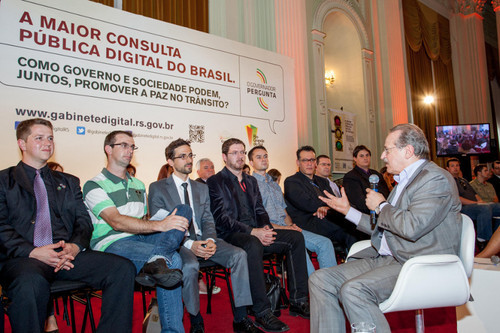
Figure 1: The 2012 meeting between Governor Genro and participants at Piratini Palace (Source: https://blog.allourideas.org/post/75399372139/the-governor-asks-again)
The state government responded to each of the ten priority proposals. Governor Genro met with the authors of the 50 contributions that received the most votes. The public meeting took place at Piratini Palace, the seat of power for the state’s executive, and provided a further platform to publicize the project. Then the Governor referred a proposal to the relevant state committee or agency to take action on the proposal. One citizen who participated in the program, Ricardo Ferriera, asked for 24-hour healthcare clinics. In response, the government opened an emergency clinic in the Lindoia neighborhood. The state also created free bus and metro passes for low income students.
How did it work?
The first iteration of Governor Asks ran from November 9 to December 9, 2011. During the first phase of the process, users submitted policy proposals to improve public health care through the Digital Cabinet’s website (http://www.gabinetedigital.rs.gov.br/). The website was open for submissions between November 9th and November 28th. Citizens were asked to submit proposals according to five themes: Family Health, Comprehensive Care, Urgency and Emergency, Access to Medicines and Health in Your Region. The second iteration ran for a similar time frame in 2012, with traffic safety proposals grouped into five categories: Education, Road Safety, Communication, Legislation, and Health. These categories were chosen to align with the five thematic chambers of the State Mobilization Committee for Road Safety, the body charged with implementing the state’s road safety action plan.4
During the second phase of Governor Asks, which lasted from November 28 to December 10, users voted on policy proposals using the wiki voting platform All Our Ideas to decide which 10 policy proposals were of greatest priority for the state government. This open source platform uses a pairwise voting approach, meaning that users are repeatedly presented with two randomized options and asked to choose the one they prefer. Users can also choose that they do not prefer either option, or opt to add a new idea. Thus, participants are voting as between a series of proposals pre-populated by the state or added by participants. As these new ideas are incorporated into the survey, the survey becomes more adaptive to users’ preferences as voting goes on. For example, when the New York City Mayor’s office used All Our Ideas to collect feedback on a sustainability plan, eight of the top ten ideas were voter contributions.
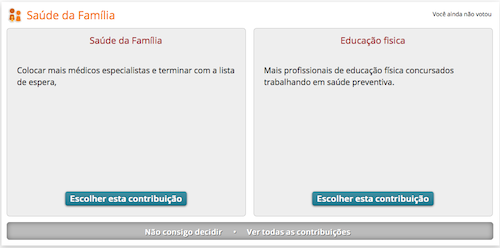
Figure 2: The All Our Ideas interface with a pair of proposals (Source: https://blog.allourideas.org/post/14248022671/governor-genro-tops-president-obama-on-citizen)
The simplicity of the interface and the ease of clicking between two options helped to attract such large numbers of participants. In addition to the wiki survey mechanism, participants were also reached through in-person outreach. Most notably, the Digital Cabinet operated a “voting van” equipped with tablets, laptop computers, and Internet access to collect survey responses from across the state. This broadened the opportunity to participate to those without access to the Internet at home. The Digital Cabinet reports that 20,000 people participated in face-to-face activities (such as meetings with public health care leaders) during the first iteration of Governor Asks, while 10,000 people accessed the voting website from the voting van.5 The second Governor Asks initiative employed two voting vans, which traveled 1,500 kilometers and visited 22 cities. There were also 150 fixed locations across the state, for instance at Driver Trainer Centers or government agency offices, where participants could go to vote online.6 The 2012 initiative also employed a modified version of All Our Ideas that worked better on tablets.7

Figure 3: Participants access All Our Ideas inside a voting van (Source: https://blog.allourideas.org/post/75399372139/the-governor-asks-again)
Why It Worked
