
Problem Solved
Cases in this category focus on how CI has been used to accelerate problem solving in a specific domain.
CI How-to
Cases in this category highlight one specific design decision.
Task Performed
Cases in this category focus on a specific type of task 'the crowd' performs.
Kind of Collaboration
Cases in this category illustrate a specific kind of group work -- crowdsourcing, collaboration or co-design.
Level of Institutionalization
Cases in this category illustrate a specific level or type of institutionalization -- low to high and 'viral' (achieved success at scale).
Project website
Name: Cidade Democrática
Topic: Corruption
Location: Brazil
Implementation Level: National
Owner: Cidade Democrática Institute
Years in operation: 2010 - present (Cidade Democrática Institute); 2018 - present (EJ platform)
Platforms: Empurrando Juntas (EJ), purpose-built software for crowdsourcing solutions to public problems
Contact Information: Ricardo Poppi, Technology Coordinator, Cidade Democratica
Contact Email: [email protected]
CASE STUDY LAST UPDATED: October 2020
In 2016, the Cidade Democrática Institute (CDI), a Brazillian social participation think tank, began developing a new tool to crowdsource solutions to public problems in support of campaigns organized by government and civil society organizations. The tool, known as Empurrando Juntas (“Pushing Together”), or EJ for short, is currently being piloted in partnership with an anti-corruption campaign in Brazil coordinated by Transparency International. The idea of using EJ on this campaign is to gather opinions about the overall strategy for implementing several proposed new measures to combat corruption so that Transparency International can better understand how to build trust and perform outreach to its potential participants.
EJ uses artificial intelligence to place users into opinion groups based on their common responses to questions, with the hypothesis that grouping will make it more feasible for participants to both find common ground and recognize other groups for collaboration, which in turn will translate into the development of better-quality solutions.
Background:
Having worked on several citizen participation initiatives throughout Brazil, Cidade Democrática’s leadership was well-acquainted with the challenges of attracting sustained and impactful engagement. A prime example was Cidade Democrática’s own “Ideas Challenge'' initiative, launched in 2011, which used purpose-built software (also called Cidade Democrática) to crowdsource solutions to challenges posed by city and state governments. Though deployments in 15 cities and two states across Brazil collected hundreds of ideas for how to address issues ranging from access to justice and security in São Paulo to quality of life in Sorocoba, the Ideas Challenge “could not effectively address what happens after producing and sharing ideas: collective action,” wrote Ricardo Poppi of Cidade Democrática in 2016.1 While the platform succeeded in sparking conversation, it did not facilitate any follow-up action on the solutions discussed.
In 2016, Cidade Democrática began to develop a new platform that could imitate the success of Pol.is --the online deliberation software famously used to resolve contentious policy debates on the vTaiwan platform-- in helping users with differing viewpoints find common ground. This approach was based on the hypothesis that wrapping Pol.is’s opinion grouping functionality in an application could also allow for messaging and other ways to facilitate follow-up action among people of the same opinion groups.
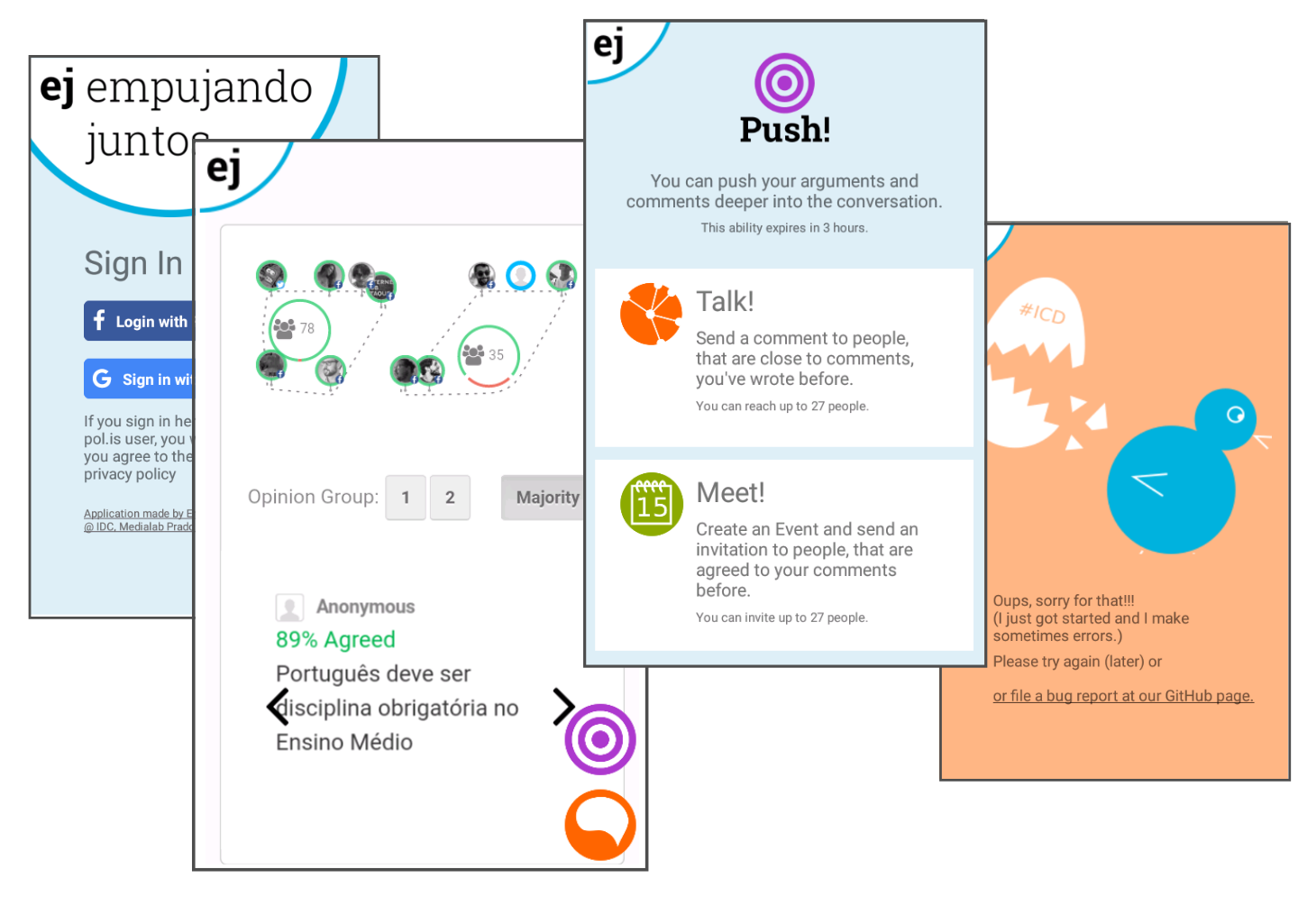
Figure 1: Wireframes of the EJ app in development (Source: Cidade Democrática, CC BY-NC-SA 4.0, https://medium.com/cidades-democr%C3%A1ticas/o-novo-aplicativo-do-cidade-democr%C3%A1tica-7a9998f79750)
In 2016, Cidade Democrática convened a workshop at Medialab Prado where an international team of developers --including the creators of the Pol.Is and vTaiwan platforms-- collaborated to design an application that could combine the deliberation functionality of Pol.is with features like push notifications and messaging to encourage collaboration among users with shared opinions.2
The application was named Empurrando Juntas (“Pushing Together”), or EJ for short. In 2019, Cidade Democrática began a pilot project, funded by Open Society Foundations, to test the use of EJ in support of Unidos Contra a Corrupção (“United Against Corruption”), a campaign coordinated by Transparency International. The application will collect feedback from the campaign’s participants about the implementation of the 70 measures proposed to combat corruption, which include draft laws, resolutions, and proposed amendments to the Constitution.3
The result?:
The pilot project is currently under development. The project was started in August 2019, but was frozen temporarily to allow the CDI team to fine tune the technology. The EJ app for United Against Corruption is expected to launch in March of 2020 and no results are expected until mid-year. Transparency International expects to use the outputs to better understand how the measures and their communications about them can be refined to build cross-partisan political support for the campaign. For instance, by understanding how the center-left sees the rhetoric used in the measures, the campaign can better target its outreach to this population.4
The campaign is also accompanied by an EJ application on Cidade Democratica’s website, created in partnership with Brazilian Social Observatory, which seeks to create an opinion map of people’s views on the most effective ways to combat corruption. So far, 200 people have participated by commenting and voting on responses to the question “How can your attitude build a Brazil free from corruption?”
EJ also achieved proof-of-concept at a much smaller scale during its launch at the 4th Innovation Conference at ENAP (the Brazilian National School of Public Administration) in November of 2018. The tool was used to survey more than 350 conference participants --most of them public servants-- on the question “How can public services adapt to the demands of the citizen of the future?” Participants submitted 111 comments which received over 5,000 votes. Based on how each participant responded, EJ successfully mapped respondents into three opinion groups: Engaged Leaders, Humanists, and Technologists.
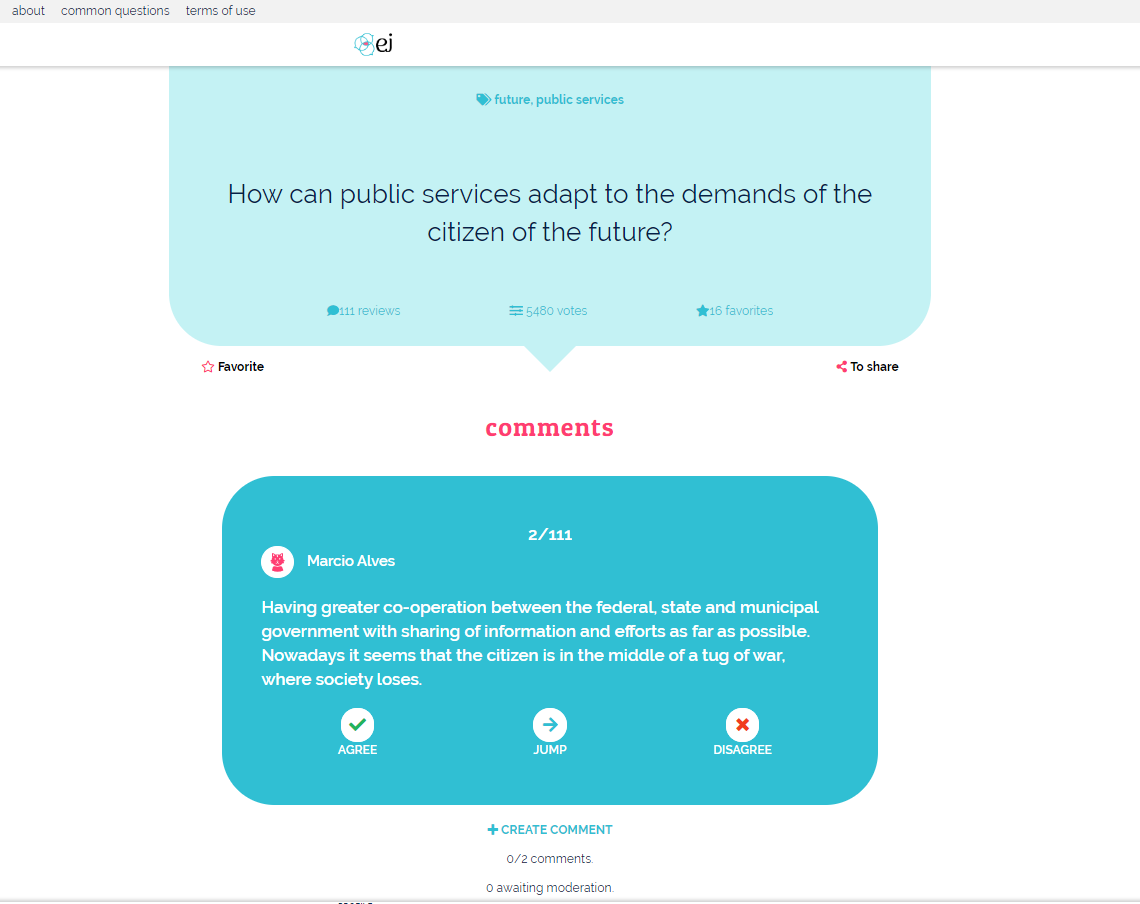
Figure 2: EJ in use at the ENAP conference (translated by Google)5
How Does It Work?:
The tool’s administrator first starts a “conversation” around a particular question or questions (the ENAP example also collected responses to the question “What can be done to overcome the challenges of the government's digital transformation?”). The administrator can also seed the conversation with responses to guide the discussion. After registering with a name or email, anyone can respond to the question with a comment. Users are presented one comment at a time which they can “vote” on by choosing to agree, disagree, or skip to the next comment.6
On the back end, the tool uses an algorithm to put users into opinion groups according to their common answers to questions. These opinion groups will be used for what EJ’s creators call “anti inflammatory gamification.” The idea behind this concept is to show participants comments that are close to but not the same as theirs in order to promote deliberation rather than polarization. In theory, these cross-group interactions help to build bridges across differences in opinion. As Henrique Parra Parra Filho of Cidade Democrática wrote in 2017, the app aims “to bring diversity to the opinion bubbles that alienate people from the informed debate and undermine the ability of minorities to communicate their agendas.”7 Opinion grouping can also make it easier to coordinate digital or in-person meetings among participants with similar priorities.
The EJ tool is also gamified in the sense that voting on comments is designed to be like a game where users can earn points for participating. The initial round of voting for EJ’s pilot saw an average of 16 votes per user.
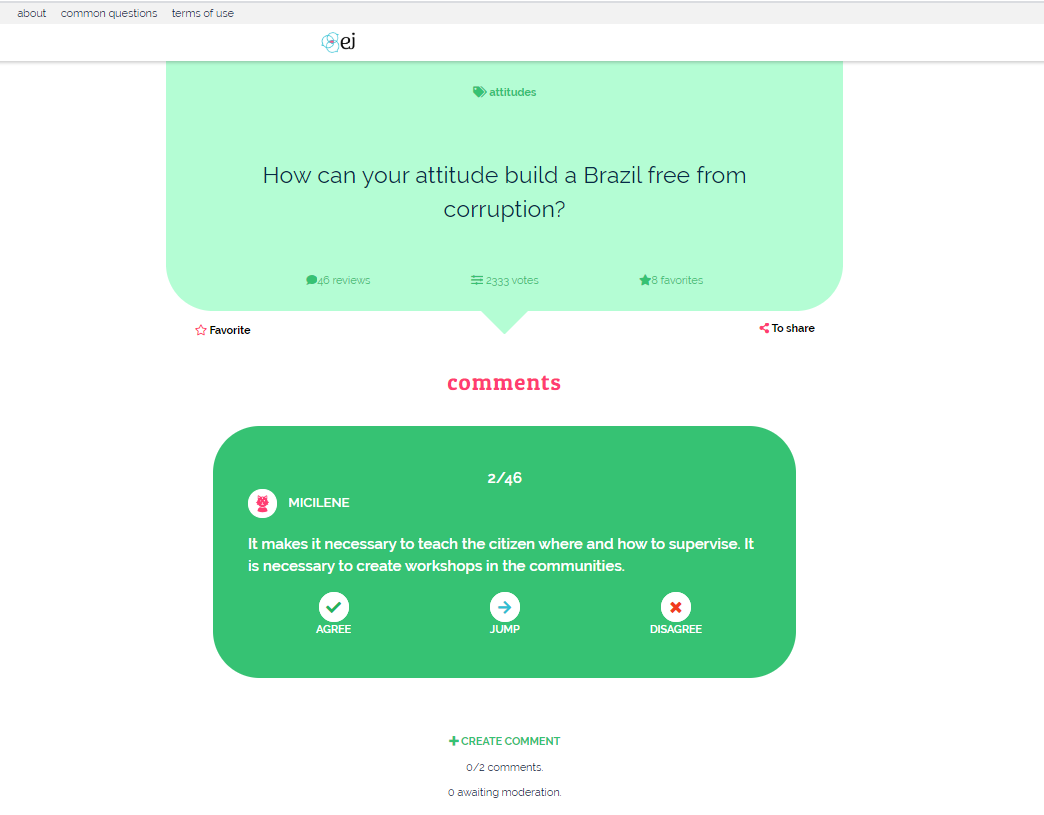
Figure 3: EJ in use on the anti-corruption campaign (translated by Google)8
Cidade Democrática’s goal is for local governments and organizations to use the EJ as a crowdsourcing tool for campaigns like United Against Corruption. As the tool is free and open-source, it can easily be adopted and customized by anyone who wishes to use it.
Why It Works:
While it is too early to offer a comprehensive assessment of EJ, the approach has several key features:
