
Problem Solved
Cases in this category focus on how CI has been used to accelerate problem solving in a specific domain.
CI How-to
Cases in this category highlight one specific design decision.
Task Performed
Cases in this category focus on a specific type of task 'the crowd' performs.
Kind of Collaboration
Cases in this category illustrate a specific kind of group work -- crowdsourcing, collaboration or co-design.
Level of Institutionalization
Cases in this category illustrate a specific level or type of institutionalization -- low to high and 'viral' (achieved success at scale).
Project website
Name: Carbon Neutral Helsinki 2035
Topic: Climate Change
Location: Helsinki, Finland
Implementation Level: city
Owner: City of Helsinki
Years in operation: 2018-present
Platforms: Climate Watch website
Contact Information: Sonja-Maria Ignatius, Product owner of Climate Watch
Contact Email: via [email protected]
https://ilmastovahti.hel.fi/yhteyshenkilon-ohjeet
CASE STUDY LAST UPDATED: October 2020
Introduction
Many cities have a long-term sustainability plan with a series of ambitious goals for the distant future. Yet such plans are too often long on promises and short on actual accomplishments. Seeking to avoid this pitfall, Helsinki’s Mayor’s Office published its collaboratively drafted and continuously monitored Carbon-Neutral Helsinki 2035 Action Plan in 2018. The plan lays out 147 goals with concrete actions assigned to civil servants within Helsinki’s government, who in turn report data on their progress through the city’s Climate Watch website, where citizens can hold them to account for progress. This collaborative approach, which engages the whole city in setting and achieving targets, helps to ensure that each necessary action is taken, while also institutionalising collaboration across government departments to further fine-tune the carbon-neutral plan and its implementation. The unique website is open-source, meaning that others can freely adapt and modify its code to create their own citizen monitoring projects, and the creators strongly hope other cities will reuse the tool to set and monitor goals as a community.
How it all started
In 2017, Helsinki’s newly elected city council drafted a four-year strategic plan. The council aimed, among many other goals, to make Helsinki carbon-neutral by 2035. The plan tasked city officials with rapidly putting in place an effective road map for carbon neutrality 15 years earlier than was previously planned (the previous target was for 2050). Recognising the ambitiousness of this goal, the city sought to engage as many stakeholders as possible in the design and implementation of the plan.
With this in mind, the Carbon-Neutral Helsinki 2035 Action Plan was co-written by an expert group convened by the city’s Urban Environment Division in an open process, using input from workshops for civil society organisations, stakeholders such as Helen (the city’s energy company) and researchers.1 Furthermore, the city displayed all documents online in real time for public comments through the action plan’s website (stadinilmasto.fi).
This collaborative drafting process produced an action plan identifying 147 actions to be taken to reduce the city’s carbon emissions by 80 per cent from 1990 levels while also offsetting the remaining 20 per cent by 2035.2 Acknowledging that few of these tasks could be undertaken by the government alone, as well as the need for public accountability lest the plan fail to be implemented and become obsolete, the city sought to create a collaborative monitoring system that would engage the public as stakeholders in the plan’s implementation, evaluation and refinement.
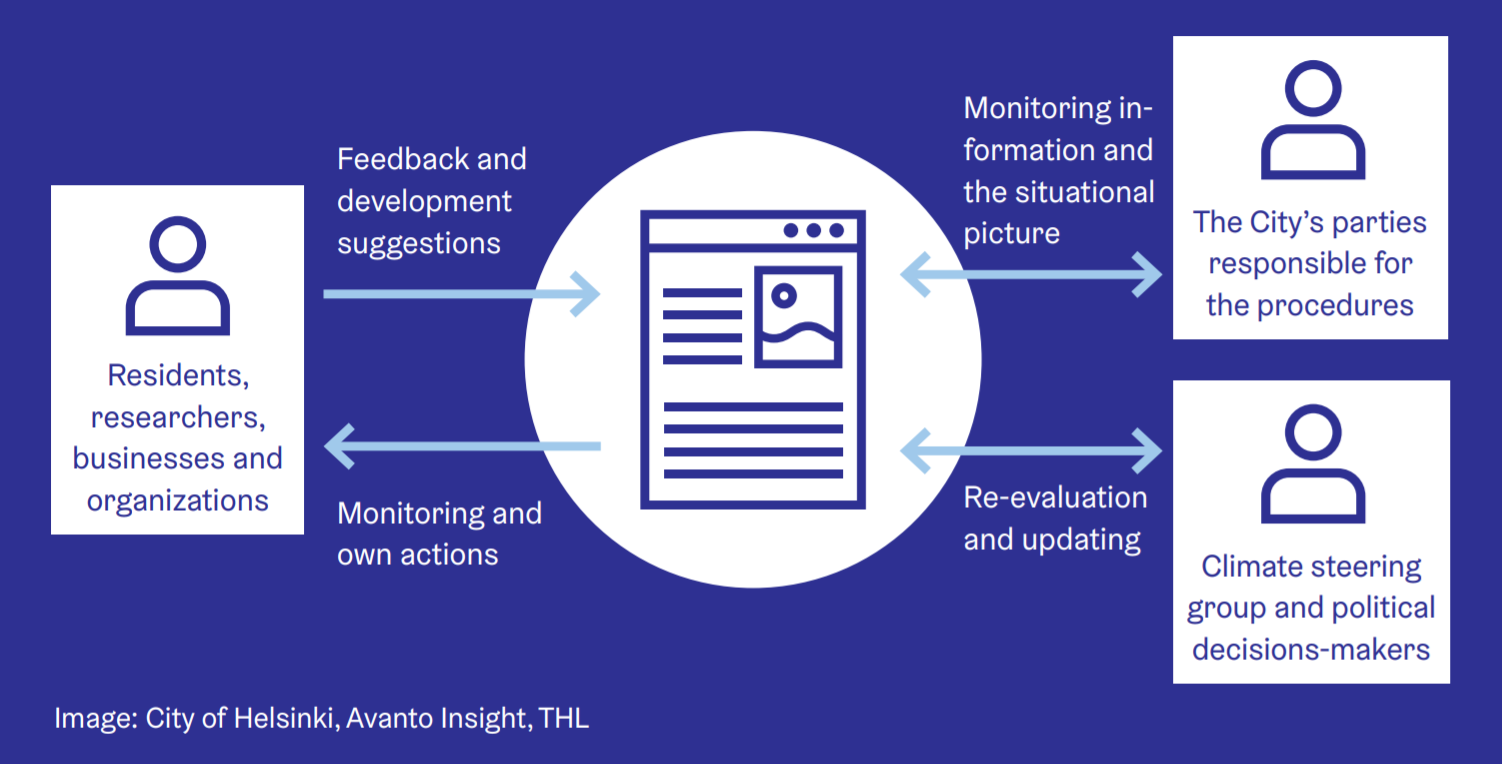
Figure 1: Blueprint for the Collection Action Scheme model
https://www.stadinilmasto.fi/files/2018/12/Helsinki_180618_FinalReport_CASintoPractice.pdf
The collective intelligence process
How does it work?
In November 2019, the city launched the Helsinki Climate Watch website (https://ilmastovahti.hel.fi) to track the city’s progress towards each of the 147 measures defined in the action plan. For each measure, the website identifies:
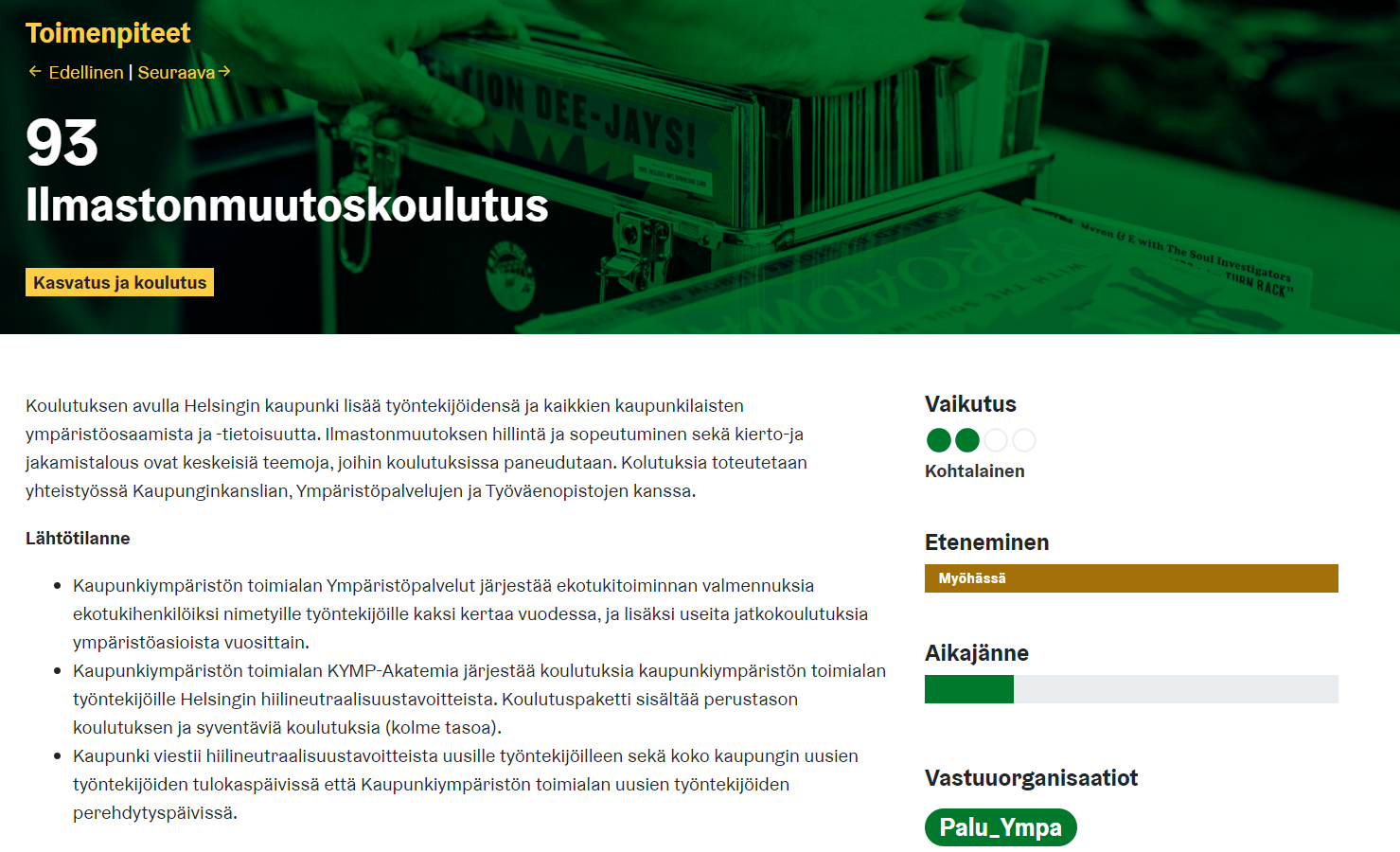
Figure 2: Measure 93, which focuses on Climate Change Training
https://ilmastovahti.hel.fi/actions/93 / CC BY 4.0
The aim is to develop an operating model for effective, transparent and collaborative management of climate actions that offers more real-time feedback instead of waiting for annual reviews or multi-year milestone reporting. The website is currently the most visible element of this – it provides an easily digestible snapshot of each task along with the person responsible for completion, making it easier for interested citizens to get involved in the monitoring and evaluation of the issues they care about. ‘We want to let people see what we are doing so that they can also put some pressure on the politicians’, said Sonja-Maria Ignatius, product owner of Climate Watch. ‘If they don’t know what’s happening, it’s very difficult to influence anybody.’
While Climate Watch is the public-facing interface, it has also developed capacity for city officials to work collaboratively to coordinate actions and monitor them in real time. Each of the 147 actions is attributed to a unit within the city’s government which is responsible for its implementation. Each unit assigns one or more contact persons to each task, who update the content for each action on the Climate Watch website. There is a separate administration interface where the contact person can log in to make these updates.
|
Carbon Neutral Helsinki Contact Persons Most of the actions within the Carbon Neutral Helsinki 2035 Action Plan require effort from other stakeholders outside the government to succeed. However, the City of Helsinki assumes responsibility for making sure these actions are completed, and allocates these actions to departments within the city’s government to oversee their implementation. The city also realized the importance of delegating a specific person to oversee each of the actions. The contact person is in charge of monitoring their action or actions. In most cases, the contact person is not in charge of the implementation of the action alone because most of the actions require collaboration among many departments and often also political decisions. The contact person helps in the coordination of the action, including liaising with those responsible for its implementation, and making sure that the information on the Helsinki Climate Watch website is up to date. |
To quantify progress towards each target, the platform also pulls raw data from the relevant unit in the city’s government, entered manually using the administration interface directly into the Climate Watch website. If necessary, the data is then run through a statistical model to calculate the final ‘indicator’ – a measurement that quantifies how much progress has been made towards the target and what remains to be done. For example, progress towards Goal 2, which aims to construct a 130-kilometre bicycle path network by 2025, is measured in kilometres of bicycle paths. Or Goal 68, which aims to eliminate oil as a form of heating by 2035, is measured by the amount of greenhouse gas emissions from oil heating. These data are collected by the relevant agency. But because the information is made transparent via the website, the public can also verify claims.
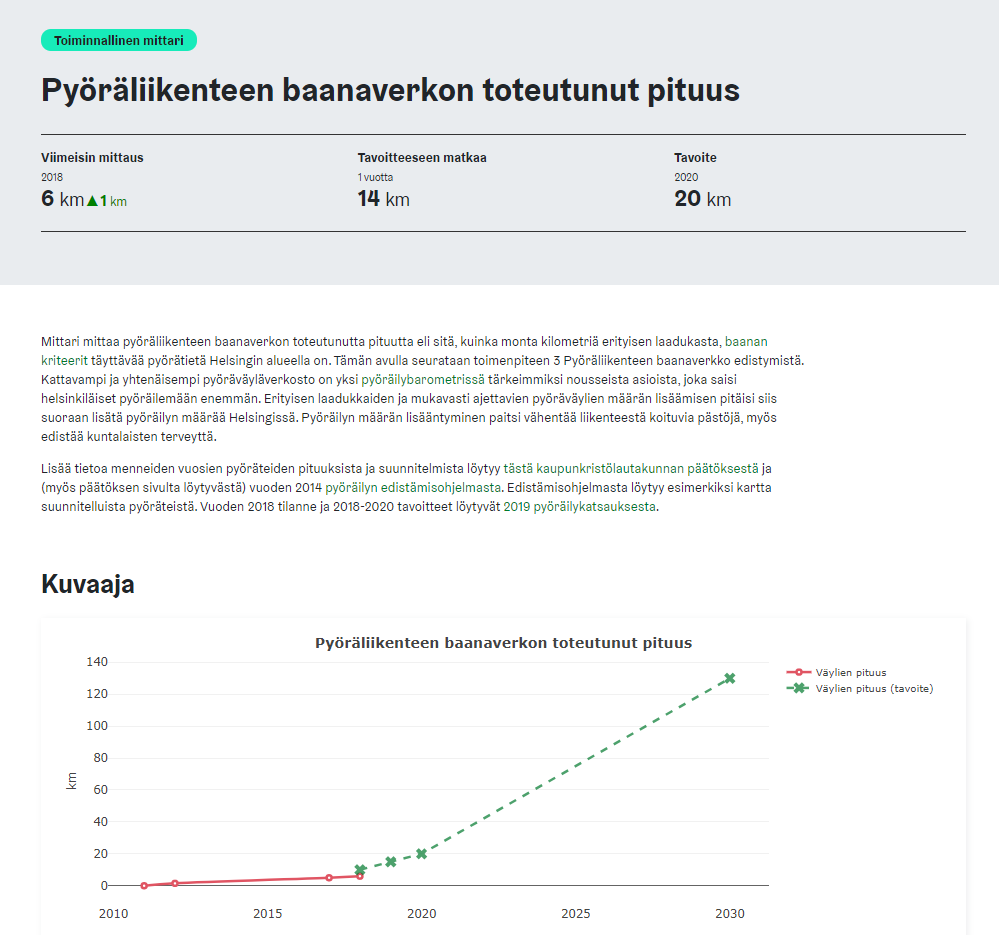
Figure 3: The indicator and data visualization for Measure 34, which deals with the inner-city cycling network (Source: https://ilmastovahti.hel.fi/indicators/34 / CC BY 4.0)
Such data-driven indicators provide empirical measures of success while also allowing lesstechnical users, whether citizens or those in the city’s government, to more easily understand how much progress has been made towards each goal and what remains to be done. Sharing this data in a common system, rather than this intelligence being compartmentalised within each department, also helps civil servants to learn from the challenges others have faced.
Who participates?
This monitoring scheme taps the collective intelligence of three main stakeholder groups:
The website has seen between 1,300 and 1,800 visitors per month. As the city has not marketed the site much, those numbers are considered reasonable at this stage.
Outcomes and impacts
The monitoring system is less than a year old, so it is too early to calculate the impact the plan has had on greenhouse gas emissions or civic engagement in Helsinki.
However, anecdotally, the monitoring system has helped engage members of Helsinki’s government in monitoring the action plan collaboratively. Sonja-Maria Ignatius mentioned that the responsible persons for each measure have helped to build accountability in city government departments. By distributing responsibility, the initiative has spurred departments to organise events to support Carbon-Neutral Helsinki of their own accord rather than at the initiative of the Environment department. Esa Nikunen, Director General of Environmental Services, echoed this sentiment, saying that
Climate Watch also empowers our staff to take more responsibility of the climate actions, and the citizens can observe how we are advancing. The openness of the platform creates a lot of opportunities to improve collaboration in climate change mitigation.
Citizen groups have also stepped up their efforts. Just days after launch, a community group in Helsinki calling themselves the Climate Watch Dogs formed to aid in monitoring the city’s progress towards each goal. The group reached out to each Climate Watch agency contact person to ask why some measures were delayed and to discuss the city’s planned steps to get these back on track. This engagement demonstrates the public’s interest in collaborating with the city to evaluate and continuously refine the climate action plan.3
Key innovation
Carbon-Neutral Helsinki 2035 has incorporated collaboration at each step of implementation, from the collaborative drafting process that produced the report through to the transparent monitoring system. As one city leader wrote: ‘Collaboration is the key in making Helsinki carbon neutral, and the city is constantly looking for ways to engage people into climate action.’4
The city also designed the Climate Watch platform itself through a collaborative process. The city first created prototypes and demos of the website, which it presented at workshops with city stakeholders and residents to garner their feedback. For example, people reported that it was difficult to compare progress across actions. In other words, while it was easy to understand progress on one of the 147 goals, comparing the progress of one goal to that of another was difficult. Responding to the input, the team added tasks within each action, determined by the city group responsible for completing the action. This more granular means of measurement made it easier to compare progress across goals. This innovative focus on collaboration has created a plan with reasonable tasks and a monitoring system with an enthusiastic and engaged user base. The platform plans to continue to refine both the platform and the targets themselves with input from its users.
Current status
The carbon-neutral initiative appears to be well positioned within the current administration. The city council and mayor have made collaboration between citizens and the city’s government a priority. Furthermore, the Urban Environment Division created a software development team of five people working full or part time to manage implementation of the Climate Watch website. The website’s project manager works in tandem with the action plan’s project manager to manage the network of officials working on policy implementation.
The city spent a significant amount of time and energy building a competent team with a commitment to open government. As Ignatius told us:
It has been crucial for us to have a versatile team: visionary people with big ideas and engineer type of people who understand the big picture but can actually break the visions down to the next concrete steps and execute them.
The City of Helsinki has received funding from the European Union climate change innovation initiative (EIT) Climate-KIC for the development of Climate Watch.
Going forward, the city has also expressed an interest in giving citizens greater opportunities to collaborate with one another and with city leaders on Climate Watch. One way the platform’s organisers would like to do this in the future is by inviting citizens’ input on which, if any, of the 147 measures needs to be updated or suggestions for how to scale these up to have a greater impact.Another idea is to allow users to form groups oriented around a particular topic – ‘adopt a measure’ – which would help to build a network and encourage citizens to take action.
However, as the Carbon-Neutral 2035 plan was only launched in 2018, the initiative has not yet survived a change in administration. It is also not widely publicised, as the organisers are still designing more participatory mechanisms for citizens, meaning the aspiration for robust citizen engagement is still largely unrealised. Furthermore, the indicators are driven by data that, for the most part, must be manually collected and calculated. Unless more is invested in awareness building and training for both public servants and the public to participate, the possibility remains that a future administration could abolish the plan and its accompanying monitoring system or that the process will fizzle out.
Lessons learned
While Carbon-Neutral Helsinki 2035 is still in its early days of implementation, four factors will be key to its ongoing success:
