
Problem Solved
Cases in this category focus on how CI has been used to accelerate problem solving in a specific domain.
CI How-to
Cases in this category highlight one specific design decision.
Task Performed
Cases in this category focus on a specific type of task 'the crowd' performs.
Kind of Collaboration
Cases in this category illustrate a specific kind of group work -- crowdsourcing, collaboration or co-design.
Level of Institutionalization
Cases in this category illustrate a specific level or type of institutionalization -- low to high and 'viral' (achieved success at scale).
Project website
Name: Belgian Sortition Models
Topic: Citizens’ Assemblies for Legislation
Location: Ostbelgien Region, Belgium; Brussels-Capital Region, Belgium
Implementation Level:
Owner: Parliament of the German-Speaking Community of Belgium (PDG); Parliament of the Brussels Region and Parliament of the French-Speaking Community (Cocof)
Years in operation: 2019 - present
Platforms: In-person deliberation; online petitioning, buergerdialog.be
Contact Information: Jonathan Moskovic, Democratic Innovation Adviser for the French-speaking Parliament
Contact Email: via [email protected]
Yves Dejaeghere, Director of the G1000 [email protected]
CASE STUDY LAST UPDATED: October 2020
In Belgium, two regional governments are trialling related, but distinct, models of deliberative democracy based on sortition -- the ancient practice of randomly selecting citizens to participate in legislative citizen assemblies.1 While the parliament of the German-speaking Ostbelgien region, which has a population of only 77,000, was the first to adopt the sortition model in early 2019, the much larger Parliament of the Brussels-Capital Region, which has a population of 1.2 million, will implement their own sortition method in 2020. A selection of legislative committees, each comprising 17 legislators, will be complemented by a random sample of 45 citizens who will work alongside them.
These regional parliaments benefit from Belgium's unique federal system, which devolves substantial powers to the governments of each linguistic and cultural region. As political scientist Min Reuchamps writes, “Belgian Regions are critical actors as they oversee urban development and housing, environment, water and nature conservation, economy and employment policy, transport, public works, energy policy, local authorities and subsidiary authorities, external relations as well as scientific research.”2 While it is too soon to report any impacts of these assemblies, the adoption of these innovative methods -- the first of their kind to be institutionalized into formal lawmaking practice in the world -- will test whether the time-consuming sortition process can effectively use the collective intelligence of a randomly-selected group of citizens to set the legislative agenda and develop policy recommendations at a regional level.
The Ostbelgien Model
The Ostbelgien (“East Belgian”) Model, launched in 2019, uses two randomly-selected citizen councils (one with 24 members to collaborate in setting the legislative agenda and one with 25 to 50 members to develop policy recommendations) who sit within the German-Speaking Parliament (PDG). Participants deliberate in-person at the parliament building in Eupen, the capital of the region of East Belgium. The G1000, a civil society organization, designed the model in collaboration with the PDG in 2018.
How It All Started
Belgium’s German-Speaking Parliament (PDG) first used a sortion-based citizens’ dialogue to debate the issue of childcare in September of 2017. The parliament randomly selected 26 East Belgians to gather in the city of Eupen to develop a “citizens’ agenda” of the most important issues within childcare and to participate in several days of workshops with experts to formulate policy recommendations. At the end of the process, the committee presented its agenda to members of parliament, who in turn incorporated the citizens’ recommendations into the so-called masterplan for childcare in East Belgium.3
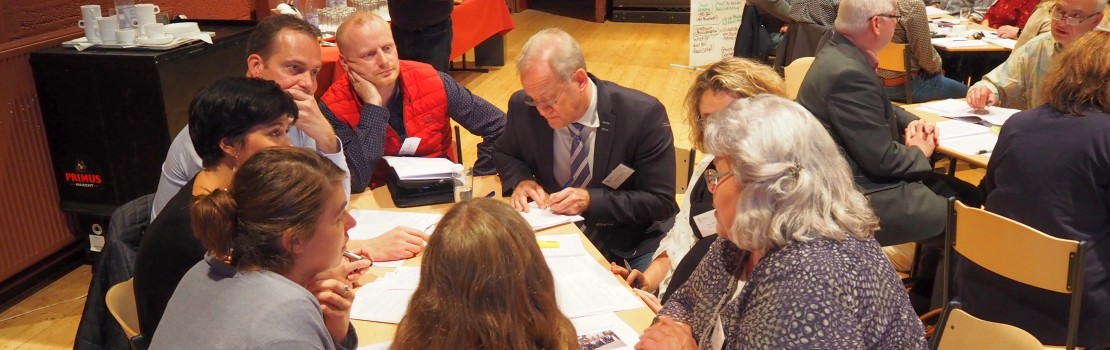 Figure 1: Citizens presenting their agenda at during the 2017 trial in Ostbelgien (Source: https://epale.ec.europa.eu/en/node/42418 / CC BY 4.0)
Inspired by the experience and the enthusiasm of its participants, Alexander Miesen, President of the PDG, approached author and deliberative democracy advocate David Van Reybrouck with an idea: creating a permanent sortition method that would institutionalize the process within the region’s parliament.4 In 2018, the G1000, Van Reybrouck’s organization for democratic innovation, brought together half a dozen experts, including the leaders of past sortition experiments in Ireland, Australia, and Poland along with several notable Belgian academics, to develop a model for implementing sortition in the PDG.
The output, which the G1000 branded the Ostbelgien Model, combines temporary agenda setting Citizens’ Councils with permanent Citizens’ Assemblies charged with making policy recommendations to the Parliament. The G1000 then worked with the PDG’s legal department to mold their model into a draft decree (the equivalent of a bill).
The German-Speaking Parliament unanimously adopted the decree in February of 2019.5 The PDG launched the first Bürgerdialog (“Citizens’ Dialogue”) in September of 2019.
The Collective Intelligence Process
How It Works
To facilitate the Citizens’ Dialogue, the Ostbelgien Model created two new types of bodies with rotating membership within the PDG: the Citizens’ Council and Citizens’ Assemblies.
The Citizens’ Council is the 24-person standing body in charge of selecting the topics that each citizens’ dialogue will cover, as well as determining the size of each Citizens’ Assembly. The Citizens’ Council comprises former Citizen Assembly participants, randomly selected by the Permanent Secretariat (a PDG employee in charge of facilitating the sortition process).6 The PDG replaces one-third of the Citizen Council members with new participants every six months.
A Citizens’ Assembly is convened for each new topic selected by the Citizen Council. Each Assembly can have between 25 and 50 members, determined by the Citizen Council. Participants can be any willing member of the public selected through sortition by the Permanent Secretariat.
These bodies carry out the Citizens’ Dialogue process through four steps: Topic Selection, Deliberation, Policy Recommendations, and Implementation.
Once per year, the Citizens’ Council initiates a call for topic proposals. Any East Belgian, including members of the public, government, and Citizen Council members themselves can submit a topic for consideration using a form on the burgerdialog.be website, via email, or on paper. The Citizens’ Council can choose any topic so long as it has collected at least 100 signatures of support as falls within the power of the PDG.
The Citizens’ Council determines the size and life span for each Citizens’ Assembly, which is then convened by the Permanent Secretary. To prepare the participants, the Permanent Secretary provides the new Citizens’ Assembly with relevant information, invites experts to deliver presentations on the topic at hand, and selects an external moderator to lead the discussion.
Once the discussions have finished, the Citizens’ Assembly formulates a set of policy recommendations, which they discuss at an open meeting of the relevant parliamentary committee. The members of parliament and relevant minister then determine whether or not they want to implement the recommendations, and announce their decision at another open meeting. If the MP’s want to proceed, they can introduce the measures necessary for implementing the recommendations. If not, they must provide the Assembly with a detailed justification of why they have rejected their suggestions.
The Citizens’ Council and Permanent Secretary are in charge of monitoring the implementation of recommendations. Within one year, members of parliament, the relevant minister, and the Citizens’ Assembly members must hold another open meeting to discuss the progress Parliament has made in implementing the recommendations.
Who Participates?
Anyone aged 16 years or older who resides in one of the nine German-speaking municipalities in East Belgium is eligible to be randomly selected for a Citizens’ Assembly, so long as they do not hold public office. To smooth the learning curve, only those who previously participated in a Citizens’ Assembly are eligible for selection in the Citizens’ Council. The Permanent Secretary randomly selects participants through a sortition process overseen by a judge. If selected, participation is voluntary. The PDG covers participants’ travel costs and provides €64 per meeting as compensation for their time.
Current Status
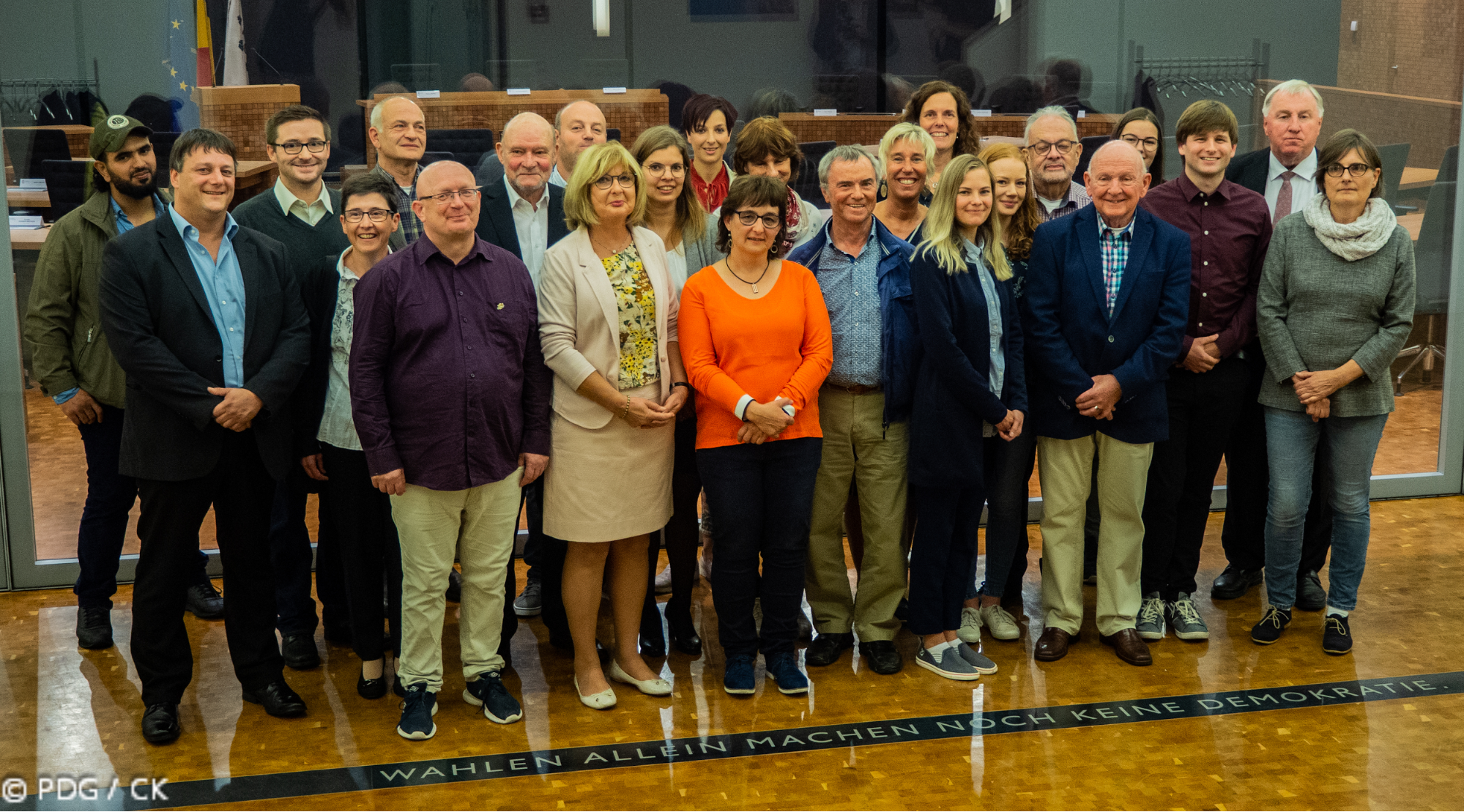 Figure 2: The First Citizens’ Council in Ostbelgien (Source: https://www.buergerdialog.be/news/detail/erster-buergerrat-hat-seine-arbeit-aufgenommen / ©PDG/CK)
The PDG organized the first sortition process in July of 2019. As there has not yet any former Citizens’ Assembly members to choose from, the PDG randomly selected 1,000 residents who they invited to participate in the first Citizens’ Council. Of the 115 who replied positively, the PDG selected a random sample of 12, representative of the population with regard to age, gender, place of residence, and level of education. An additional six participants from the 2017 childcare sortition experiment and six representatives from political parties rounded out the group of 24.7 The group met in Eupen in September and again in October to plan the topic selection process.
The Citizens’ Council organized the first call for proposals on October 1st. The Council asked residents to submit an idea for a topic including a title, explanation, and a reason why the topic is suitable for the citizens' assembly by October 31st. Each proposal then had until November 21 to gather the requisite 100 signatures, either on paper or through the burgerdialog.be website.8 The Council shortlisted the 13 best proposals and posted them for public comment on the website. After another meeting, the Council decided to convene the first Citizens’ Assembly on the topic of nursing staff and the care they provide to patients, posing the question: “Care concerns us all! How can the care conditions for staff and those affected be improved?”9
As of February 2020, the PDG is selecting the 25 Citizen Assembly participants who will develop policy proposals for the dialogue on nursing care. The PDG expects the first meetings to take place in March and early April of 2020.
Each year, the Citizens’ Council will approve a budget for the Citizen Dialogue process which the Parliament’s presidium must approve. These public funds cover the Permanent Secretary, compensation for the citizens who take part in the Citizens' Council, organizational and logistical costs, and fees of the experts and external moderator. While the exact cost will vary depending on the size and scope of each year’s meetings, the PDG estimates that the Citizen Dialogue will need a budget of € 140,000 per year.10
Though the German-Speaking Parliament passed the Citizens’ Dialogue decree in February of 2019, they decided to pause its implementation until June so as not to allow the country's general elections to influence the initiative.
|
Sortition: An Innovative Yet Ancient Practice Sortition dates back to the democracy of ancient Athens, where in the fifth century BC, Cleisthenes instituted governance by lot. In ancient Athens, where democracy began, citizen competence and expertise were central to economic and military success. Athens developed extraordinary institutional innovations for governance— with and by citizens—of a population of a quarter million people spread across twenty-five hundred square kilometers. In doing so, it made it possible to aggregate and distribute knowledge across the realm. All in all, there were fourteen unique Athenian governing institutions that managed the polis, all comprising amateur citizen participants, not professionals. The city’s success, coupled with its openness and opportunity, attracted talented people from across the Mediterranean who helped populate these new institutions. In addition, every free adult male participated in the deliberations on the Pnyx, the hill west of the Acropolis.11
Today governments are bringing back the practice as a means of tapping the collective intelligence of citizens. Legislative bodies often use these randomly-selected groups, sometimes called “mini-publics”, for one-off reforms and to create an opportunity for engagement that is more informed, thoughtful and deliberative than a referendum (alone). Ireland, for instance, initiated a Constitutional Convention in 2012, in which 66 randomly-selected citizens and 33 politicians recommended changes to the country’s constitution. The convention recommended legalizing same-sex marriage, which a public referendum passed into law in 2015. Likewise, in 2017 an even larger Citizens' Assembly recommended amending the country’s constitution to legalize abortion, which again passed into law through a public referendum the next year.12
https://en.wikipedia.org/wiki/Dublin_Castle#/media/File:The_Dubhlinn_Gardens_Dublin_Castle_01.JPG
|
The Ostbelgien Model, which Constitutional Convention organizer Dr. David Farrell helped to design, improves on the Irish experience in several ways. First, the PDG compensates participants for their time, which will help retain participants and increase the diversity of participation. Second, the Ostbelgien Model gives citizens rather than members of parliament the agenda-setting power. And most importantly, the Citizen Council rather than parliament holds the power to convene a Citizen Assembly. These changes demonstrate that Belgium is learning from the experience of others while continuing to improve the ancient practice of sortition. “Most things that exist in Ostbelgien exist elsewhere,” said Dr. Yves Dejaeghere, director of the G1000. “What we did is institutionalize it.”13
The Brussels Model
The Parliament of the Brussels-Capital Region, led by a political coalition headed by the Green Party, will implement sortition in 2020. Later this year, the French-speaking parliament, which comprises the 72 members of the Regional Parliament who represent French-speaking districts, will also implement the same model. Unlike the Ostbelgien Model, the Brussels Model retains agenda-setting power in the hands of the parliament and creates a citizen assembly of 45 citizens who will serve on a parliamentary committee together with 17 legislators and make recommendations.
How It All Started
Even before the German-Speaking Parliament launched the Ostbelgien Model, Belgium’s Green Party supported the idea of including randomly selected citizens in parliamentary debates, but lacked the political support to implement it. Upon winning a number of new seats in the 2019 general elections, the Greens were able to include this democratic reform on the agenda for the new governing coalition.
The coalition thus drafted a bill that would allow a mixed committee of members of parliament and randomly selected citizens to draft policy recommendations for parliament to consider. President of the French-Speaking Parliament, Magali Plovie, shared that the goal of citizens’ committees was to create better relations between politicians and the people by giving the broader public a chance to participate in important debates about the future.14
In December of 2019, the Parliament of the Brussels Region passed the coalition’s proposal into law. Members of Parliament widely supported the measure: 60 MP’s voted in favor and the remaining 25 MP’s who were present abstained. The French-Speaking Parliament in Brussels (Cocof) also approved the bill.
The Collective Intelligence Process
How It Works
Once per year, the Regional Parliament and the Cocof can create one or more citizen assemblies comprising a random sample of residents who work with legislators to draft policy recommendations for a given topic. These assemblies are composed of 45 randomly selected citizens in the Regional Parliament and 36 in the Cocof. They are joined to the relevant standing committee for the topic at hand (15 legislators in the Regional Parliament and 12 in the Cocof).
Unlike in East Belgium, the Brussels Regional Parliament and Cocof do not give these citizen assemblies agenda-setting power. Rather, citizens propose ideas and the Bureau of the Parliament selects the topic and defines the task of each assembly. Any citizen can organize a petition, and any group of 100 citizens can post a petition on the Parliament’s website. At least 1,000 citizens must sign the petition for the Parliament to consider choosing the topic. The topic must also fall within the competence of the Parliament to be considered.
After selecting the assembly members, the Parliament then organizes a series of meetings in which the citizen participants and MP’s deliberate on the topic and develop policy recommendations. The assembly lasts for a minimum of four days. The exact duration of the assembly depends on the topic and is determined by a scientific committee, composed of experts on participatory democracy, thematic experts, and members of the administration. At the end of deliberation, both citizen and parliamentary members of the assembly vote on each recommendation. Citizens vote secretly while the MP’s hold a public vote.
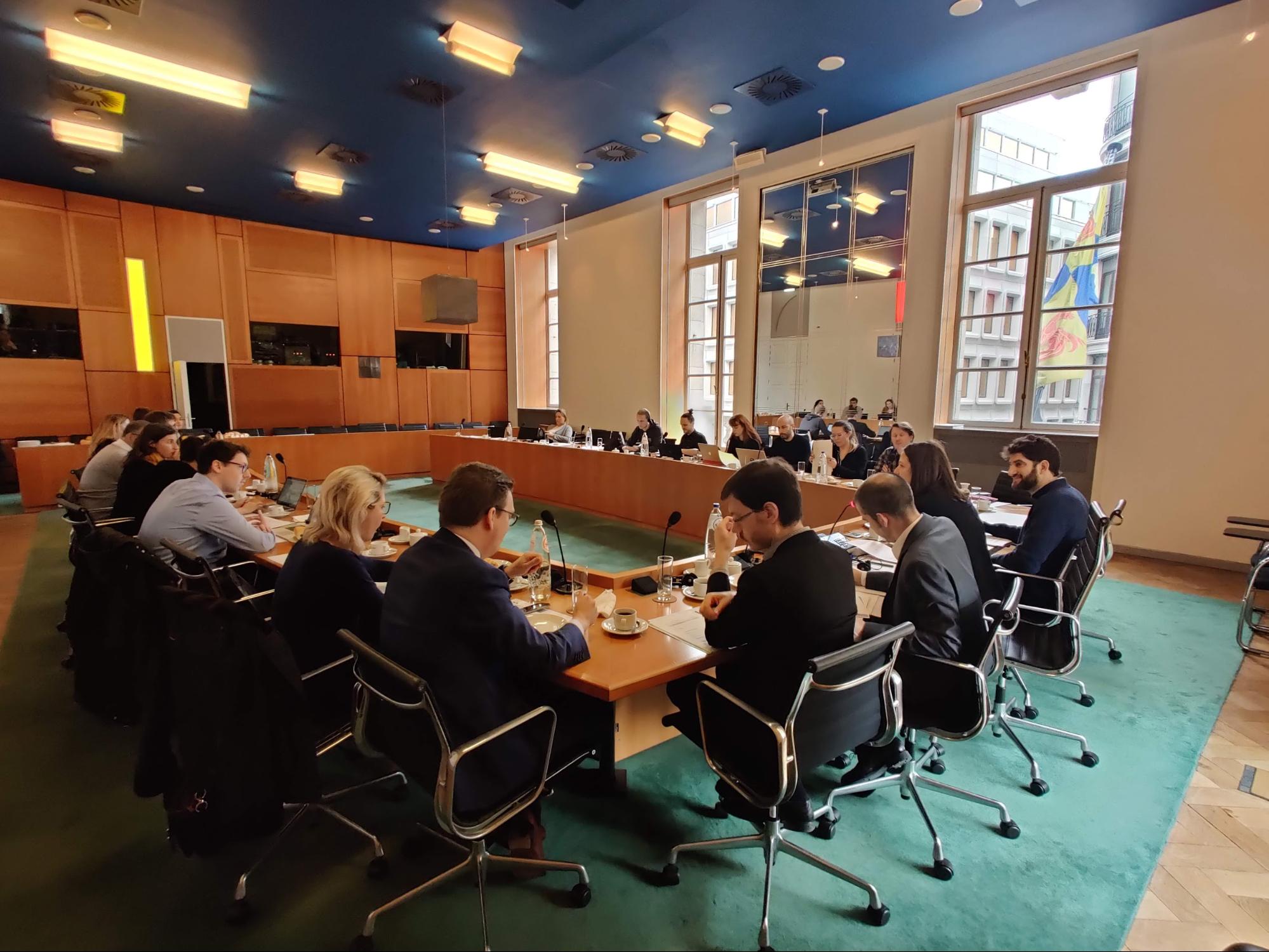 Figure 4: Inside the Cocof. Photo courtesy of the French-speaking Parliament.
If a majority of the citizens in the assembly approve a recommendation, those MP’s who voted against it or abstained must publicly justify their decision. Within six months, the standing committee shall publish a report justifying the steps they have taken toward addressing the recommendations. It must provide detailed reasons for its choice of follow-up actions. The standing committee invites the citizen participants to participate in a meeting where the committee presents the results of the report. As in the Ostbelgien Model, the Parliament is not bound by law to implement any of the recommendations that citizen assemblies make.15
Who Participates?
The Parliament chooses the participants for the citizen assemblies through two rounds of sortition. In the first round, the Parliament, working with the federal administration in charge of the national register, chooses random members of the public and invites them to participate. To be chosen one must be a resident of the Brussels Region who is at least 16 years old and not hold public office. A second draw among those who have expressed interest in participating selects a sample that is representative of the gender, age, geography, level of education and language spoken of the region’s population. Citizens serve for the length of the assembly, which differs depending on the topic.
Current Status
The Parliament plans to hold the first citizen assemblies by the end of 2020. As the initiative passed so recently, they are still organizing and ironing out the details, but plan to start with two to three assemblies per year -- each one affiliated with a different parliamentary committee-- and then expand and repeat the process if it appears to be working.
The Parliament plans to use an online platform to explain the random selection process and track the process of each assembly. They do not plan to incorporate much use of technology beyond that in order to ensure that those who live in poverty can participate. This is based on the as-yet-to-be-tested assumption that face-to-face participation is more equitable than online participation. “Collective intelligence is more a question of diversity than interest,” said Jonathan Moskovic, Democratic Innovation Adviser for the Cocof. “What we really want --otherwise it will be a failure-- is we want to avoid having the usual suspects of participation.”16 To reach less-represented populations, they will organize a campaign to make the public aware that will include traditional outreach through newspapers and radio as well as with unions and other non-governmental stakeholders.
The Parliament is also considering several steps to build its institutional capacity, including hiring a Permanent Secretary to administrate the process. They will also hire a scientific committee to evaluate the process and recommend improvements.
To ready participants, the Parliament is considering training, particularly language training for those who do not speak French or Flemish. They are also considering training MP’s to help them learn to support citizens and their ideas.
Lessons for Institutionalization
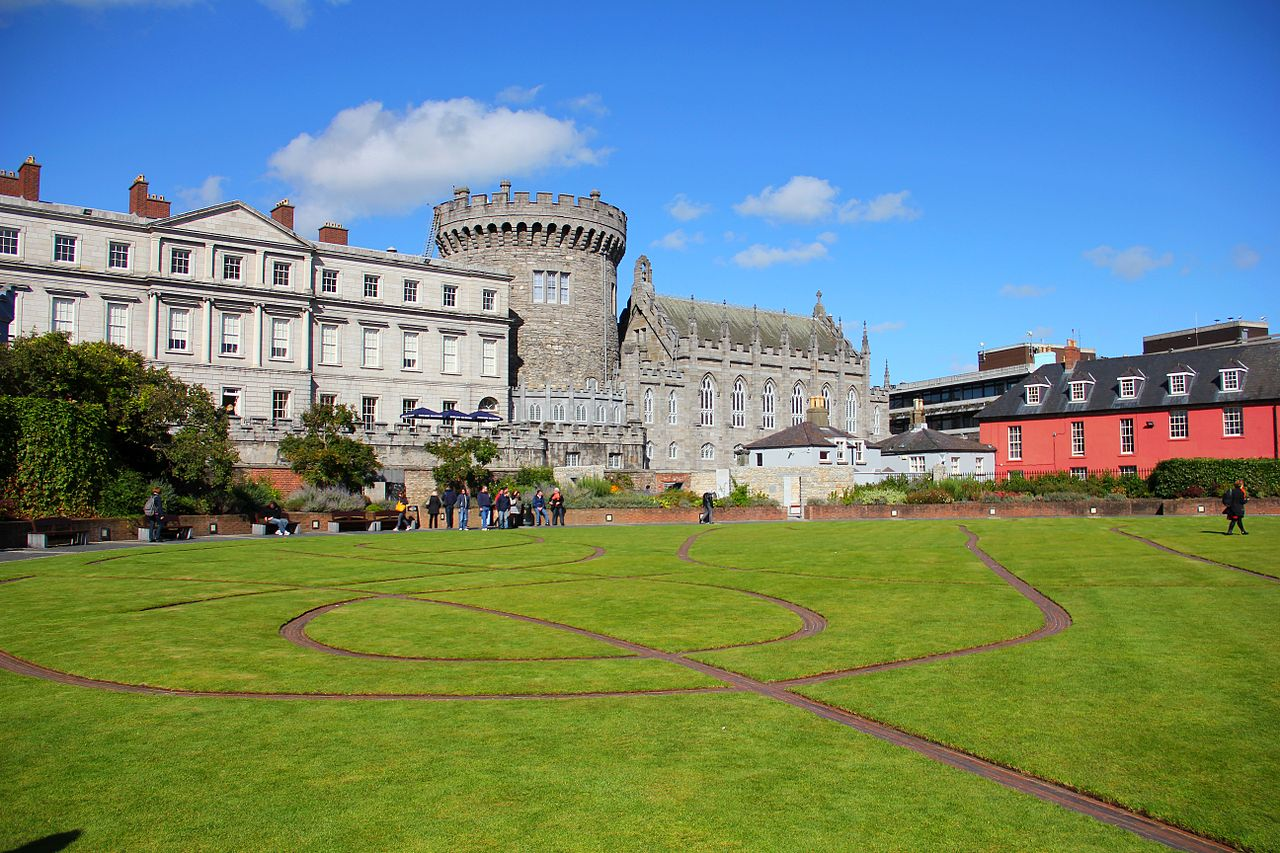 Figure 3: Dublin Castle, the site of the first meeting of the Irish Constitutional Convention

