
Problem Solved
Cases in this category focus on how CI has been used to accelerate problem solving in a specific domain.
CI How-to
Cases in this category highlight one specific design decision.
Task Performed
Cases in this category focus on a specific type of task 'the crowd' performs.
Kind of Collaboration
Cases in this category illustrate a specific kind of group work -- crowdsourcing, collaboration or co-design.
Level of Institutionalization
Cases in this category illustrate a specific level or type of institutionalization -- low to high and 'viral' (achieved success at scale).
Project website
Name: Abre
Topic: Urban Green Space
Location: Peñalolén, Chile
Implementation Level: city
Owner: Fundación Ciudadanía Inteligente
Years in operation: 2017 - present
Platforms: Web; in-person
Contact Information: Manuel Barros, Former Project Manager, Smart Citizenship
Contact Email: [email protected]
CASE STUDY LAST UPDATED: October 2020
Abre is a platform and method for cities to engage their community in the creation, design, implementation, and evaluation of a local project through a mixture of online and offline consultation. Fundación Ciudadanía Inteligente (FCI or Smart Citizenship), a Chilean non-profit that works on democratization projects in over 10 locations across Latin America, is the creator of Abre, a four-step process for engaging residents in the co-design of city services. Peñalolén, a city with 250,000 inhabitants in the Santiago Metropolitan Region of Chile, collaborated in the design of Abre and piloted its use in 2017, when 200 citizens submitted more than 40 proposals to redesign the city’s San Luis Park. While Abre is one of many examples of cities co-creating services with citizens, Abre is notable for its focus on capacity-building within the city government.
Background:
Abre was co-designed by the Fundación Ciudadanía Inteligente and city officials from Peñalolén in 2017. FCI was looking to develop a new initiative that would apply the foundation’s expertise in civic technology to a real-world local government project. Peñalolén, meanwhile, wanted to create greater opportunities for its citizens to participate using new technology. The organization and city formed a partnership to design and test FCI’s four-stage engagement methodology (Proposals, Design, Implementation, and Evaluation) by redesigning the city’s central park, Parque San Luis, with input from the surrounding community.
Prior to the start of the project, FCI developed a website (penalolen.tumunicipio.org), based on the open-source Consul platform. Consul is a toolkit for citizen engagement, originally developed in Spain, and in use in over 100 communities around the world. The website hosted the online portions of the initiative, namely the proposal and voting phases. FCI then hosted two training sessions in which the Abre process was explained in detail to working groups within the city’s government.1 They then engaged local leaders and those in the surrounding area in a four week long campaign to get the word out and encourage participation.
The result?
One result of the pilot was the creation of a new design for Parque San Luis. The final design included elements like new paving, more trees, a community garden, a dog park, and new lighting. The necessary funding for the remodelling process was awarded by the regional government in 2019, and work began on the new park in the same year. The political crisis in Chile further delayed the park’s completion, but the city expects to open the new park in March of 2020.2
Another key result was capacity building within the City of Peñalolén. Smart Citizenship transferred ownership of the penalolen.tumunicipio.org website to Peñalolén after the online portions concluded. The website is now hosted on the city’s servers. While there are no active challenges on the site, it could be used to repeat the Abre process independent of FCI in the future. The City did just that in 2018, with the Ciudadano Medioambiental (“Environmental Citizens”) challenge, where local schools proposed ideas for environmental projects that could be developed on vacant lots in Peñalolén.
Although a change in leadership and a loss of funding at FCI ended its involvement in Abre Peñalolén, FCI is planning to re-launch Abre through a school for public servants of local governments of Ecuador, El Salvador, Guatemala, and Mexico in 2020.
How it Worked:
Proposal - The first stage was conducted online using the Abre platform. The platform was open for citizens to submit proposals about what features they would like to see in the new park, and to vote on the proposals of others. A mixed team of FCI members and city employees conducted offline outreach, liaising with community members and offering them access to computers to create their proposals.
Voting - Over the course of a month, citizens submitted over 40 proposals and cast more than 200 votes of support. The three proposals that received the most votes then advanced to the design stage.
Design - During the Design phase, the city hosted a series of workshops to work out a design for the park. Those who lived in the community surrounding the park were invited to attend two co-design sessions, where the municipality presented the three "winning" proposals, which were used as the starting point for the design process. Those two sessions produced a plan that synthesized the inputs from citizens into one balanced and feasible project.
After the first two stages, ownership over Abre Peñalolén transferred from FCI to the City of Peñalolén.
The latter two stages --implementing the chosen plan and evaluating the result with input from the community-- were left to the city. In the end, the public did not participate in implementing the plan because the city delivered the project through a contract that did not allow for third parties to be involved. As the new park includes a dog park, once the park is open the city will organize training on responsible ownership of pets to keep the community involved in the project. 3
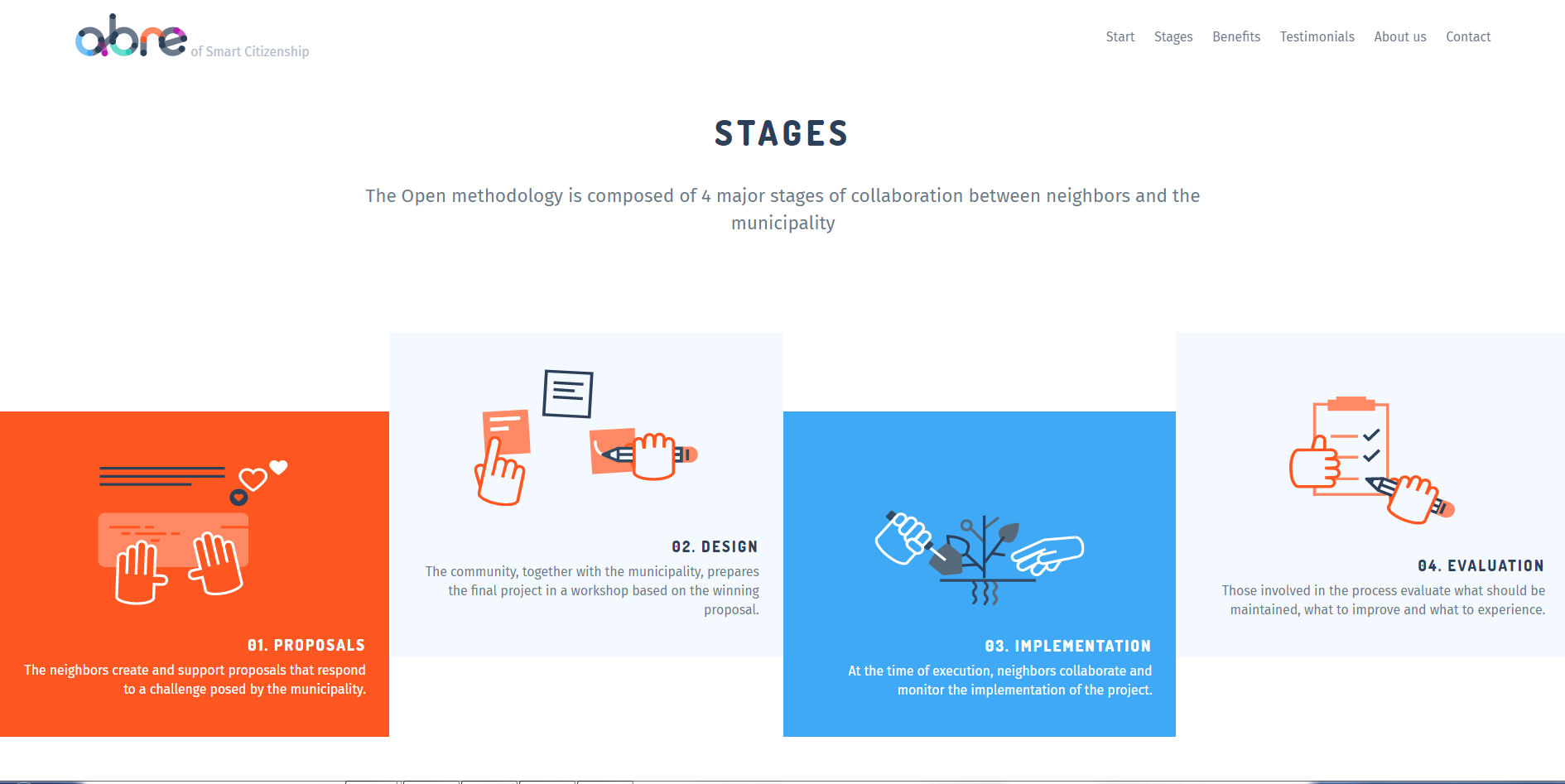
Figure 1: The four-stage Abre methodology (Source: https://abre.tumunicipio.org/)
Why it Worked:
